Morocco VII: Marrakech
Surely everyone is familiar with the beautiful exotic name of “Marrakech.” The word was cemented by musical history’s 1969 hit tune from Crosby, Stills & Nash, “Marrakesh Express.” I felt compelled to blast my fellow minibus passengers with that ode to the hippy trail the morning in February 2026 when we headed west over the Atlas mountains toward that fabled city. (They were good sports.)
The ancient (and cinematic) city of Ait BenHaddou
On our drive from Skoura, we had two main stops. First was Ait Benhaddou, an 11th century fortified village rebuilt in the 17th century. It is a prime cinematic location used as the backdrop for dozens of movies and TV series ranging from Lawrence of Arabia to Game of Thrones to the newly-released movie, Odyssey.
Then it was up and over the famous Tizi n’Ticha pass (until only a few days before closed by snow!). At last, we reached Marrakech. Or is it Marrakesh? Take your choice, but the Moroccans spell it “Marrakech.”
The snakes at Jemaa el-Fna
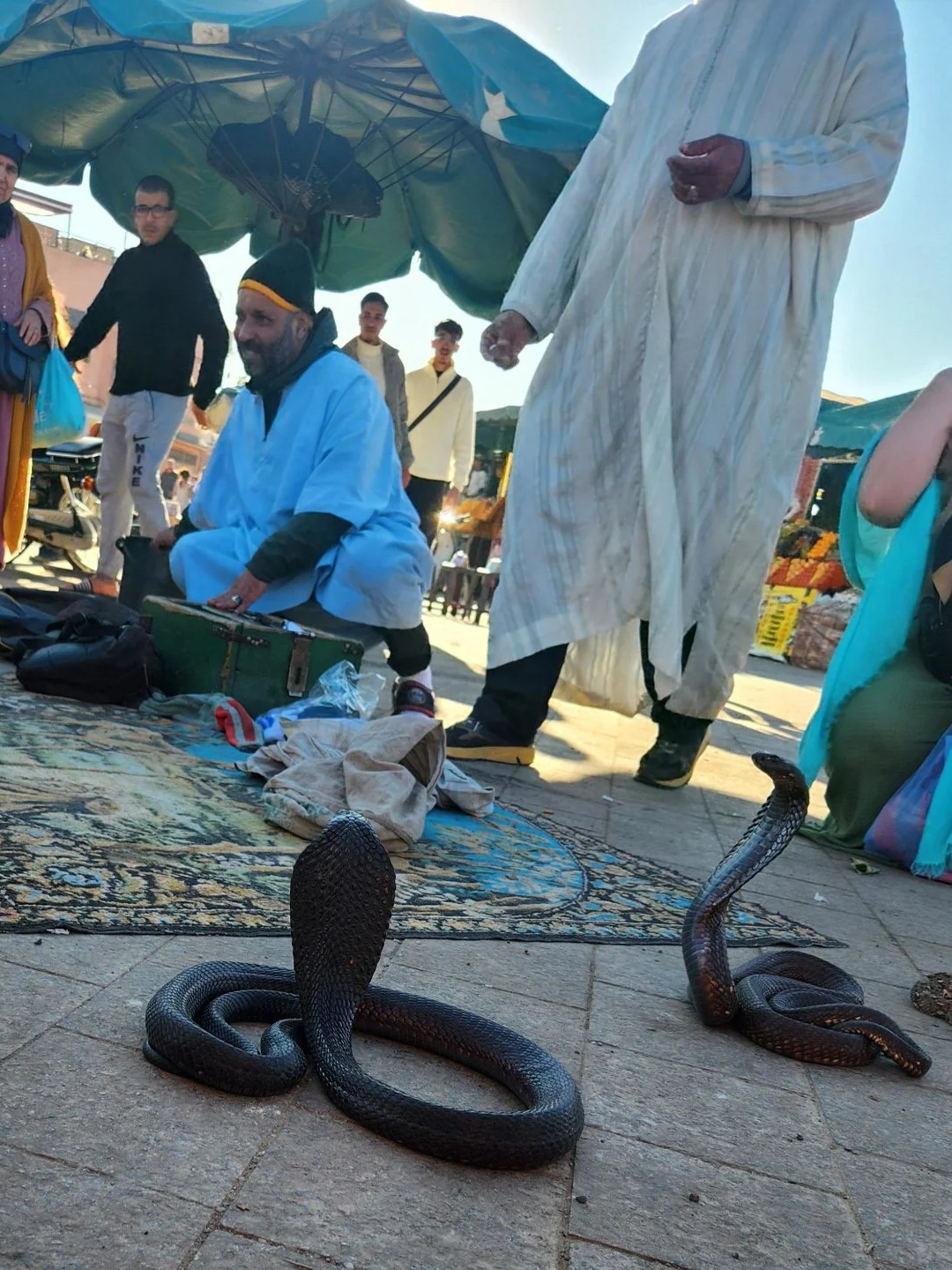
As the finale to a fabulous two weeks in Morocco, Marrakech delivered. It was three nights and two days of everything you can imagine: labyrinthine alley streets, crowds, bustle, souks with every merchandise imaginable, spice and herb markets, hammans, historical gardens. The center of it all, the infamous and giant square known as Jemaa el-Fna, is where Margaret and I were good sports, posing with cobras while draped by non-poisonous snakes. Why not? In Morocco’s more gruesome past, Jemaa el-Fna is also where, until the 19th century, criminals sentenced to death were executed, sometimes dozens in a day.
A ceiling at the Bahia Palace
One burial site at the Saadian Tombs
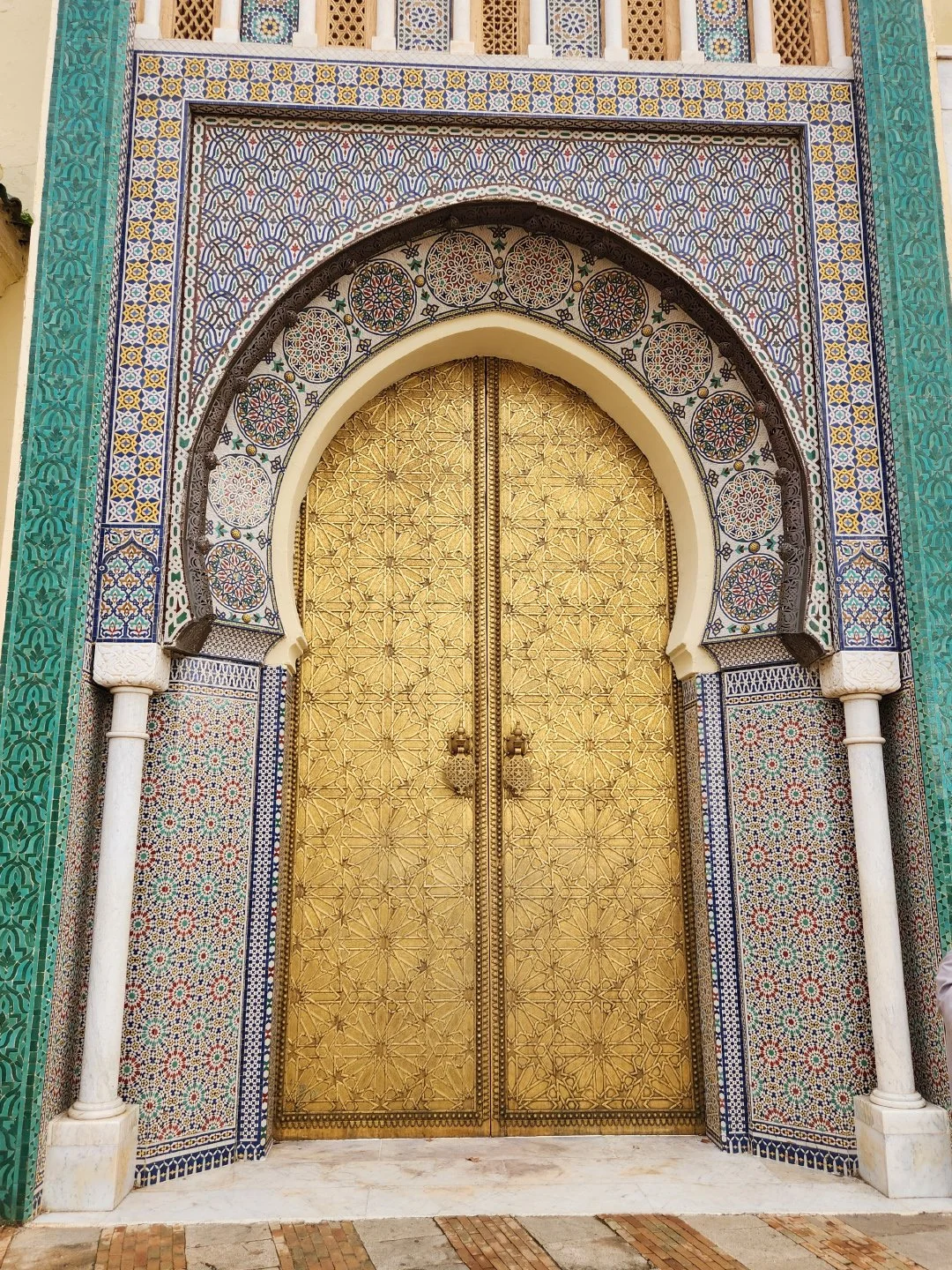
Our capable local guide, Moulay, entertained us with history, stories, and more as he showed us around the city. No matter where we went, the emphasis on religion and learning was evident. Every wall and even the ceilings were decorated in intricate patterns of stucco, carved plaster, zellige (like mosaic) tiles, and cedar wood. The Bahia Palace...the Jewish quarter, or “mellah,”... Ben Youssef Medersa, a former Islamic school...the Saadian Tombs...it was a whirlwind of sensory overload that I both welcomed and found exhausting. To really know Marrakech, I think, one would want to plan a (much) longer stay, but what a thrill to have such a fulfilling taste of this amazing place.
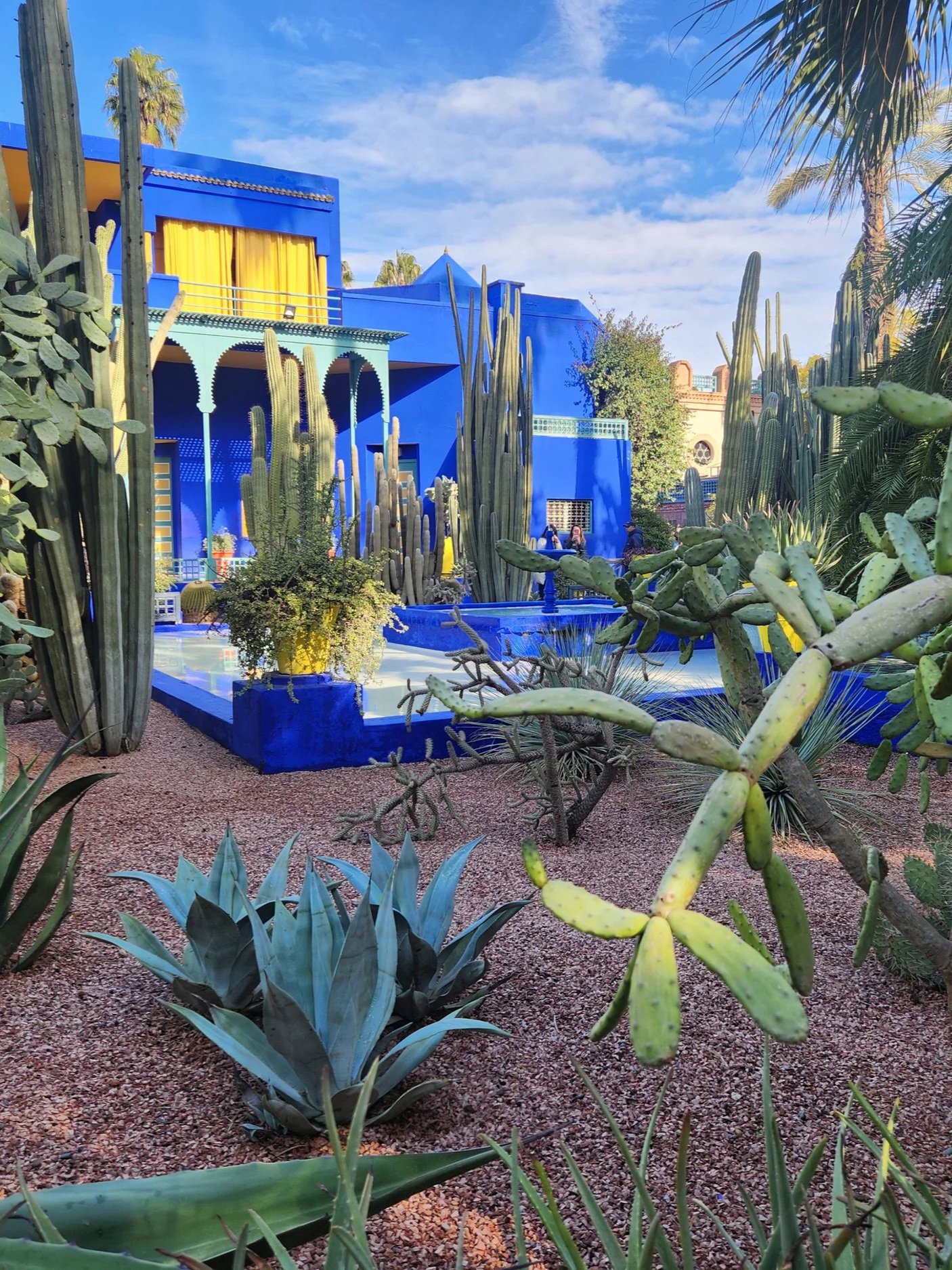
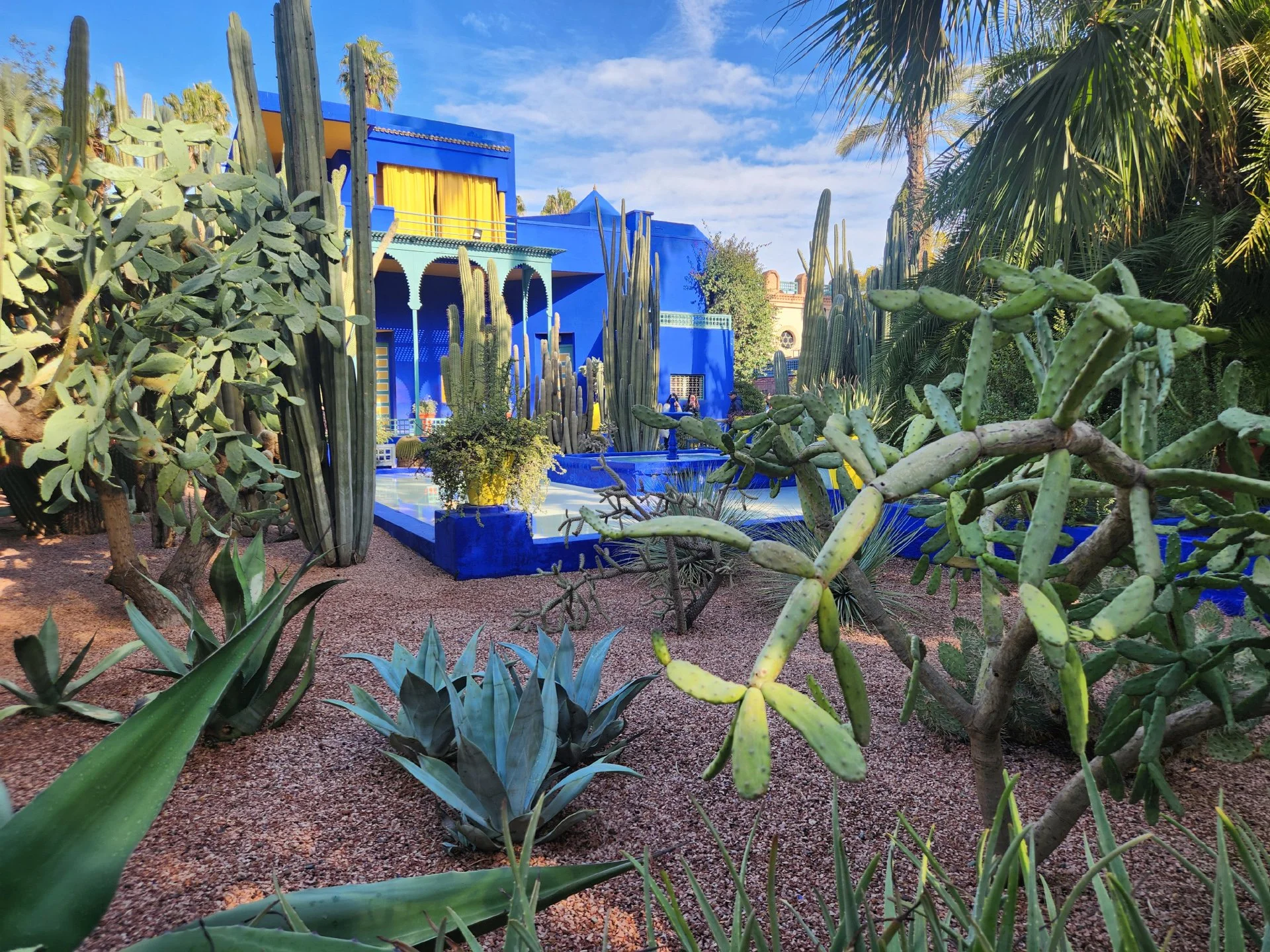
On our final morning, we departed from antiquity and visited a garden in Ville Nouvelle (New City) established by French painter Jacques Majorelle in the 1920s. The place was imbued with a powerful shade of “Majorelle blue” a striking cobalt blue named for him. In 1980, the Majorelle Gardens were suffering. Fashion designer Yves Saint-Laurent purchased and restored the site. Lush, with hundreds of species of palm, cactus and other plants, the garden also has a brilliant museum with more than 600 items from Berber culture housed in Majorelle’s original studio building.
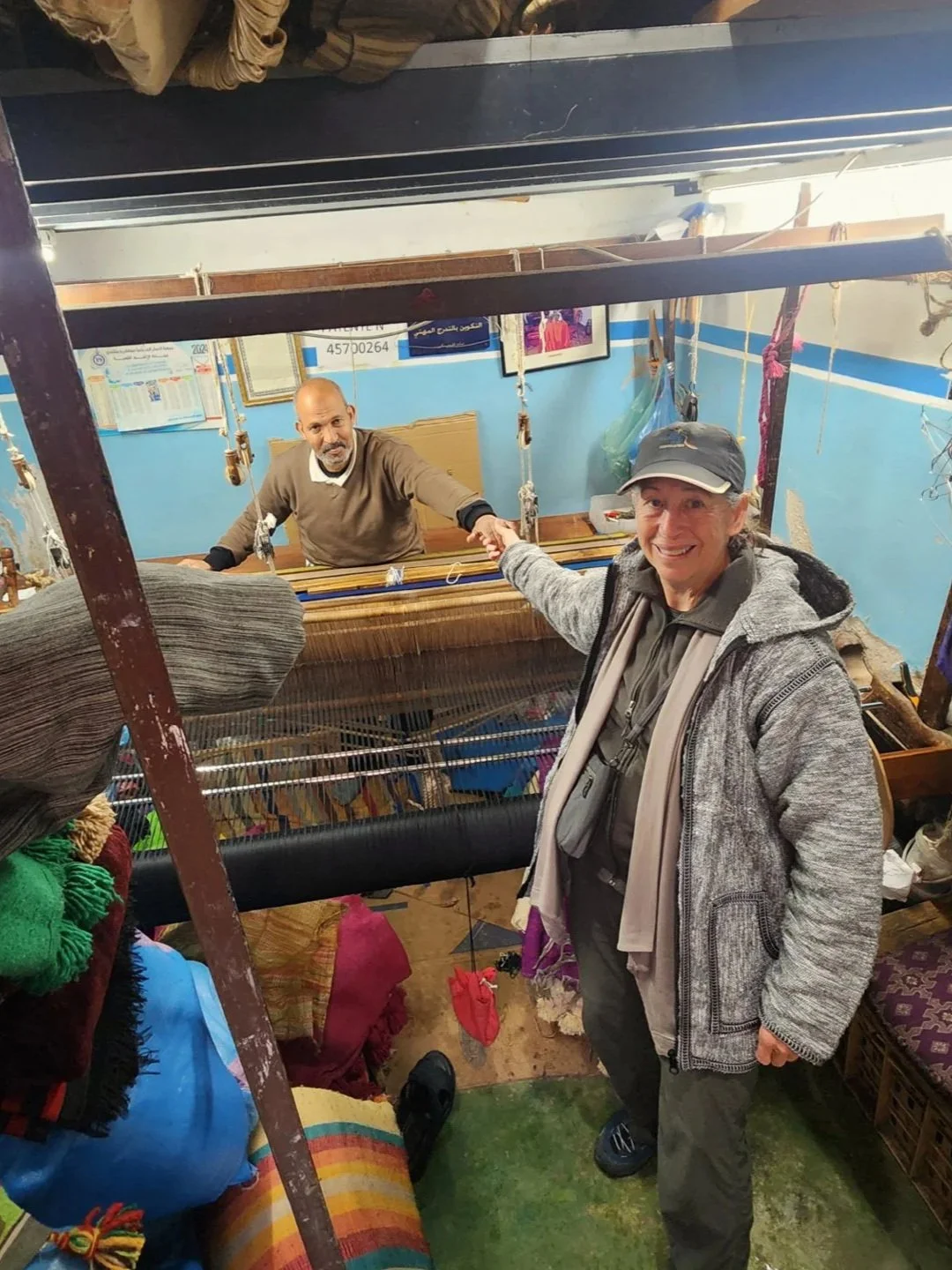
Me and my djellabah’s maker!
Famous for its focus on trade, Marrakech has for centuries been known for its thriving souks, and this continues to be a mainstay. As we wandered through them, we saw tradesmen and craftspeople in shops sometimes the size of a closet. After enjoying the national cuisine for so many days, Amy could contain herself no longer and stopped at an attractive tagine shop. We enjoyed watching her barter, with Ali’s help, and walk away with her ceramic cooking vessel carefully wrapped for the long journey home. As for me, I had wanted a djellabah since Chefchaouen. I finally found it in a minuscule shop in the alley near our riad (hotel) where the weaver had to crawl under his loom to get out. There was joy on both sides as I bartered successfully and, with a photo and a handshake, departed wearing my waist-length version of this traditional Moroccan garment.
After a resplendent final dinner, complete with Gnaouan singers and a belly dancer, our fellowship disbanded. The following morning we went our separate ways. It was not easy to say farewell to our incomparable trip guide, Ali ait Ichou—who headed out with his next tour group just three days later!
[Our adventure travel company was Wilderness Travel. For more about it, see www.wildernesstravel.com]