Paramedic Origins
It was December 1973 when I first heard the term “Emergency Medical Technician.” In that moment, I snapped my fingers, pointed into the air and proclaimed, “THAT’s what I want to do.” It took until 1977 to be in one place long enough to earn that basic EMT certification. In the meanwhile, I assisted a man named Greg Betts who, ahead of his time, had developed a course he taught at colleges throughout New England called “Mountain & Woods-Oriented First Aid and Rescue.” By then, I had under my belt the 8-hour American Red Cross first aid card, two wilderness expedition courses with NOLS (National Outdoor Leadership School), and a couple of years with Vail Mountain Rescue Group. I had also worked demanding rotating shifts as an emergency services dispatcher in Vail, CO.
But as soon as I earned my EMT, I headed straight for the ambulance world. After a year in private service with Physician’s Ambulance in Denver and earning my paramedic certification in January 1979, I was honored with a position among the paramedic pioneers at Denver General Hospital.
It was a time of innovation and invention and courage and (very) high standards set by our medical directors, who risked their licenses on the actions of our dedicated and ballsy group. As a testament of our bonds, many of us are still in touch to this day.
Even in the late 70's, the concept of Emergency Medical Service was still a relative upstart. But in the wake of this year’s EMS Week (an annual May celebration inaugurated by President Gerald Ford in 1974), I have been humbled to learn about the true pioneers of my craft. If you want to know where it all began, pick up the book, American Sirens, by Kevin Hazzard, and read about the men of Freedom House in Pittsburgh, PA.
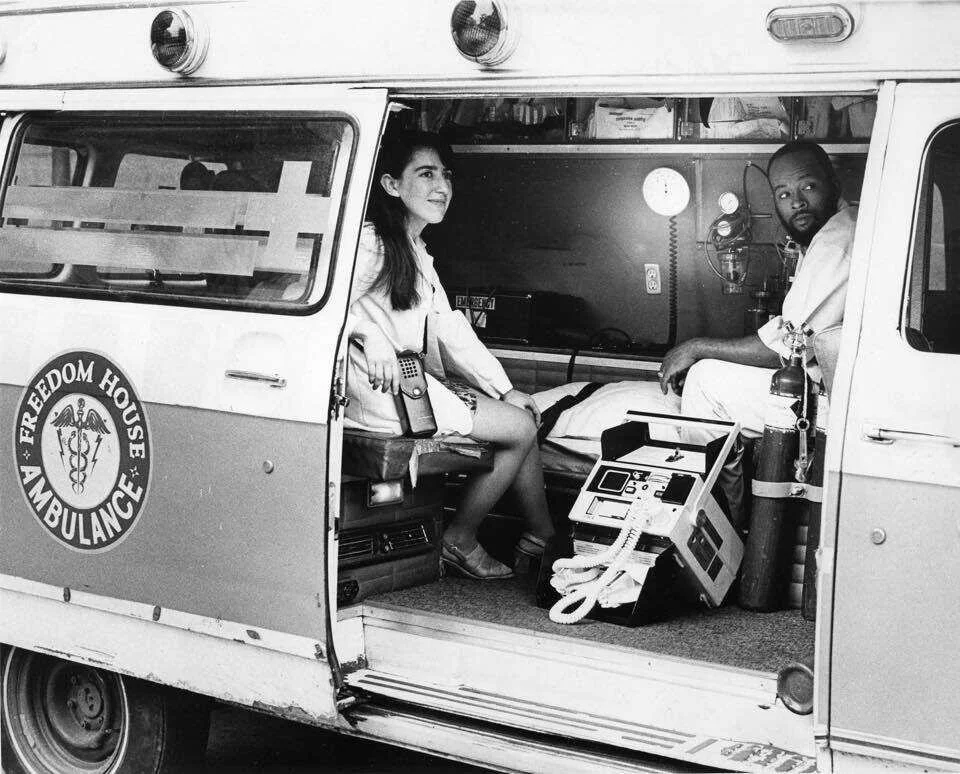
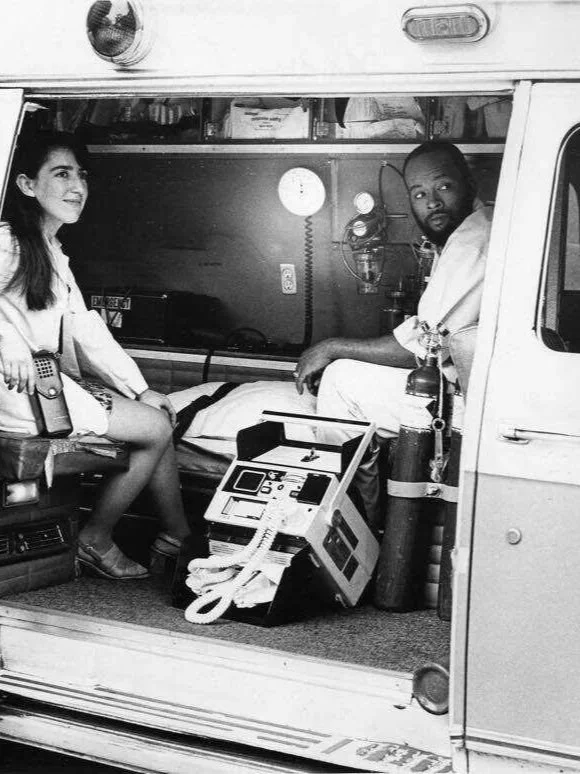
They were 24 Black men living in the disadvantaged and unserved Hill district and led by two visionaries, Dr. Peter Safar and Dr. Nancy Caroline. In 1967, the first Freedom House men trained for 32 weeks before becoming the nation’s first true paramedics. In an era when victims of sudden illness or injury were tossed (usually alone) in the back of vehicles driven typically by funeral home workers or the police, Safar and Caroline taught those first paramedics to package trauma patients to preserve life and limb. CPR? Of course; Safar invented it. On medical calls, they read EKGs and delivered medications. They were the first non-doctors to intubate airways. Caroline also wrote the seminal paramedic text, Emergency Care in The Streets.
This is a book about early-day Denver Paramedics
In 1975, Caroline engineered a demonstration of their prehospital skills during an international symposium on critical care in Pittsburgh by staging a mass casualty event outside the conference hall. Many of those observing the event (maybe even some from Denver) went home carrying that flame of possibility to their own communities. Later that year, the City of Pittsburgh kicked Freedom House in the teeth, effectively doing away with the Black men and all that they, Safar, and Caroline had built and proven, resulting in a deservedly angry and bitter end.
If life is a battle sometimes, those fighting to preserve it are its army. At the forefront to this day are my colleagues in Emergency Medical Service. EMS is an integral and essential element of public safety along with law enforcement and the fire service. Each has its own set of skills for responding to emergencies, its own role to play. That’s how a good emergency system should be. The closest (typically fire fighters with nearby fire stations) can handle basic life support needs: start CPR, stop the bleeding, catch the baby, stuff like that. The further-away paramedics are more spread out, honing their skills by running a higher volume of calls. Law enforcement is crucial for crowd management and safety. We all work together.
The hand catching the baby is mine! (From The Knife & Gun Club)
But there remains consistent confusion about my world. Let me clear up a thing or two. In many places, as in Denver, paramedic-level care comes as a separate third municipal service, or advanced-level EMS comes via private ambulance services. Elsewhere, the fire department handles both fire and paramedic-level EMS calls. My personal opinion is that a smaller volume of calls makes it challenging for someone to maintain sharp advanced-level skills but that’s how many communities have chosen to run things. Either way, every fire service nowadays runs more EMS calls than fire-related calls (leading one wag to describe it as an EMS organization that occasionally fights fires, but that’s a different discussion.)
Here’s a thought, then: if you’re inclined to thank your emergency providers, please know that thanking one does not mean that your gratitude will reach them all. Soapbox moment: of the emergency services, the one routinely, if unwittingly, marginalized is EMS. So please take time to thank your prehospital emergency medical care folks whenever possible—whether or not it is EMS week.
For the curious, Kevin Hazzard’s book is well worth your time. And so is the following video :
Heroes On Call: The true story of Freedom House Ambulance Service. This 21 minute Emmy Award-Winning Documentary can be seen at https://www.youtube.com/watch?v=UvNfxg6HOe0