Biltmore 2025
Somehow, I always knew that a visit to Asheville, North Carolina, meant a visit to Biltmore. Certain attractions are synonymous with their locations. It was a given, then, to carve out a day to go there while planning an autumn 2025 trip to the area. We knew the area could really use our tourist dollars after being hard-hit by devastating floods in the aftermath of Hurricane Helene in September, 2024.
The day was brisk but the skies were sunny and clear as we drove south 45 miles from our cabin in Hot Springs to the Biltmore entrance in Asheville. We had reserved a 10:30 a.m. entry, but I was confused. Why were we being told to allow 45 minutes to get from the entrance gate to the parking area? As it turns out, it’s a 3-mile long driveway, artfully twisting and climbing from the valley floor through beautiful wooded terrain. My imagination was on fire thinking of the true horsepower required when the house was finished in 1895 to clip-clop up to Biltmore House.
The reception foyer.
Met in the parking lot by an enthusiastic docent (who was still there four hours later!), we learned that the drive can be clogged by motor homes and inexperienced drivers. On our off-season Thursday morning in November, we had made good time. The docent was the first of dozens of friendly and helpful Biltmore staff/volunteers who offered us exceptional customer service throughout the day.
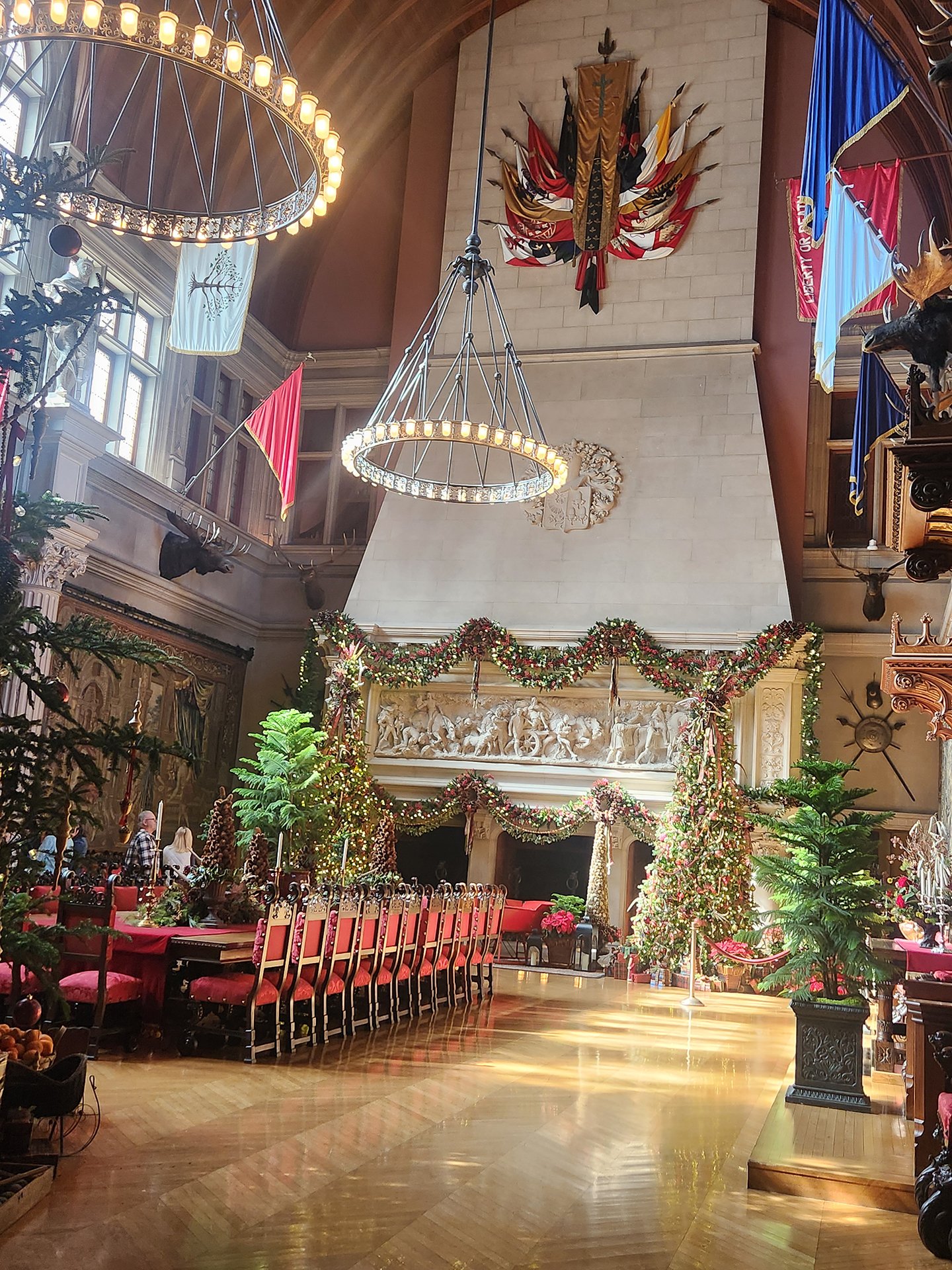
The banquet hall.
Our walk from the parking area brought Biltmore into view suddenly as we came around a corner. Even from the far end of the huge grassy lawn (complete with fountain), the grandeur of this Gilded Age mansion was clear. At nearly 179,000 sq. ft, the chateau is still the largest privately owned house in the United States. Built by George Washington Vanderbilt in the French Renaissance tradition of the Loire Valley, its 250 rooms include 35 bedrooms, 43 bathrooms, and 65 fireplaces. Although it actually served as the family’s home, the Vanderbilts really enjoyed entertaining! There are a grand foyer, a music room, gathering areas both upstairs and down from the sweeping staircase, a cool patio and a stunning library housing 10,000 of Vanderbilt’s 23,000 volume collection, most of which he surely read. The huge kitchen and pantry areas support an ample breakfast room and a lavish banquet room. For fun, there is a bowling alley, a well-stocked workout room including weights, and an indoor swimming pool (with separate changing areas for men and women). The high-ceilinged, well-lit and airy stables housed 30-40 horses for riding and driving, and about twenty carriages.
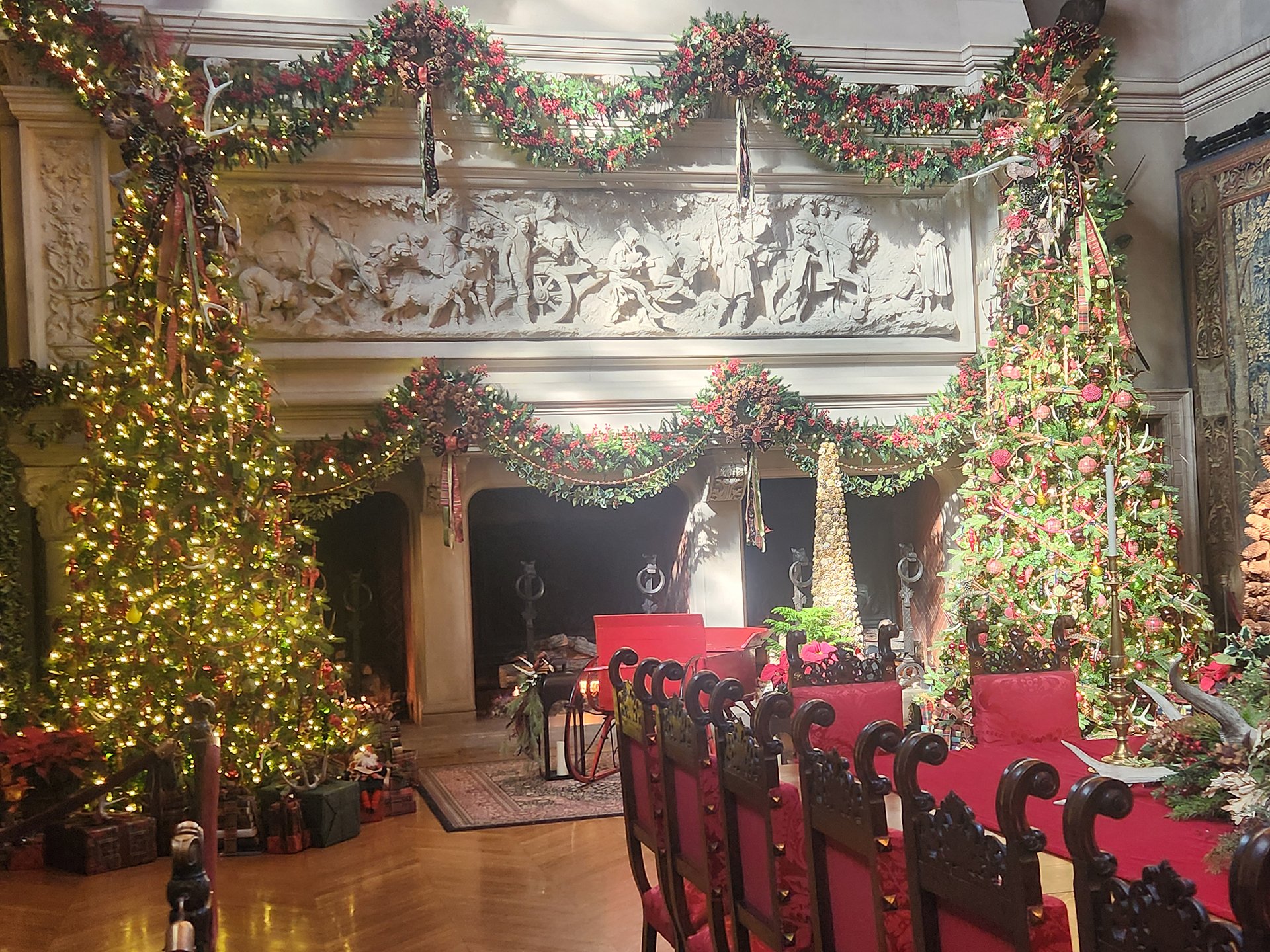
Biltmore was beautifully decorated for the Christmas season.
Using plans drawn by architect Richard Morris Hunt, construction began in 1889 and took six years, 1,000 workers, and about 60 stonemasons. The cost was about $5 million (about $190 million today). The basis of George Vanderbilt’s inheritance began with George’s industrialist grandfather, Cornelius (aka “The Commodore”) who prospered mightily from shipping and railroads. George’s father, William Henry, the fourth of 13 children, carried on in the Commodore’s footsteps, beating out Rockefeller and Carnegie to be the wealthiest American by 1885, with a net worth of about $200 million ($6.35 billion today).
Vanderbilt married Edith Stuyvesant Dresser in 1898. Their only child, Cornelia Stuyvesant Vanderbilt, was born at Biltmore in 1900 and grew up at the estate. After George died unexpectedly in 1914 at age 51 (pulmonary embolism following an appendectomy), Edith was intent on carrying on George’s vision and stewarded Biltmore through World War I. When she remarried in 1925, Cornelia and her husband, Englishman John Francis Amherst Cecil lived at Biltmore, where their two sons were born. The family began to share their legacy with the public in 1930. To this day, the family owns Biltmore and its descendants are directly involved in its operation. It was named a National Historic Landmark in 1963.
A secret doorway!
George intended Biltmore as a country get-away. It perches on a stunning ridge overlooking the mountains of western North Carolina. The vistas added fuel to George’s love for natural beauty. He purchased 125,000 acres of land, much of it depleted by long-standing farming practices. A pioneer in sustainable land use practices, George (who never went to college) became a passionate and self-taught forester, inventing and supporting many innovative forestry practices. And he hired well: the acreage and the closer-by gardens were designed by the famous landscape architect Frederick Law Olmstead. In 1914, Edith sold 86,700 acres to the US government for $5/acre to help fulfill her husband’s vision for forest conservation. It was the nucleus of Pisgah National Forest which is now about 500,000 acres. This legacy gift was instrumental in establishing both our national forest system and the US Forest Service.
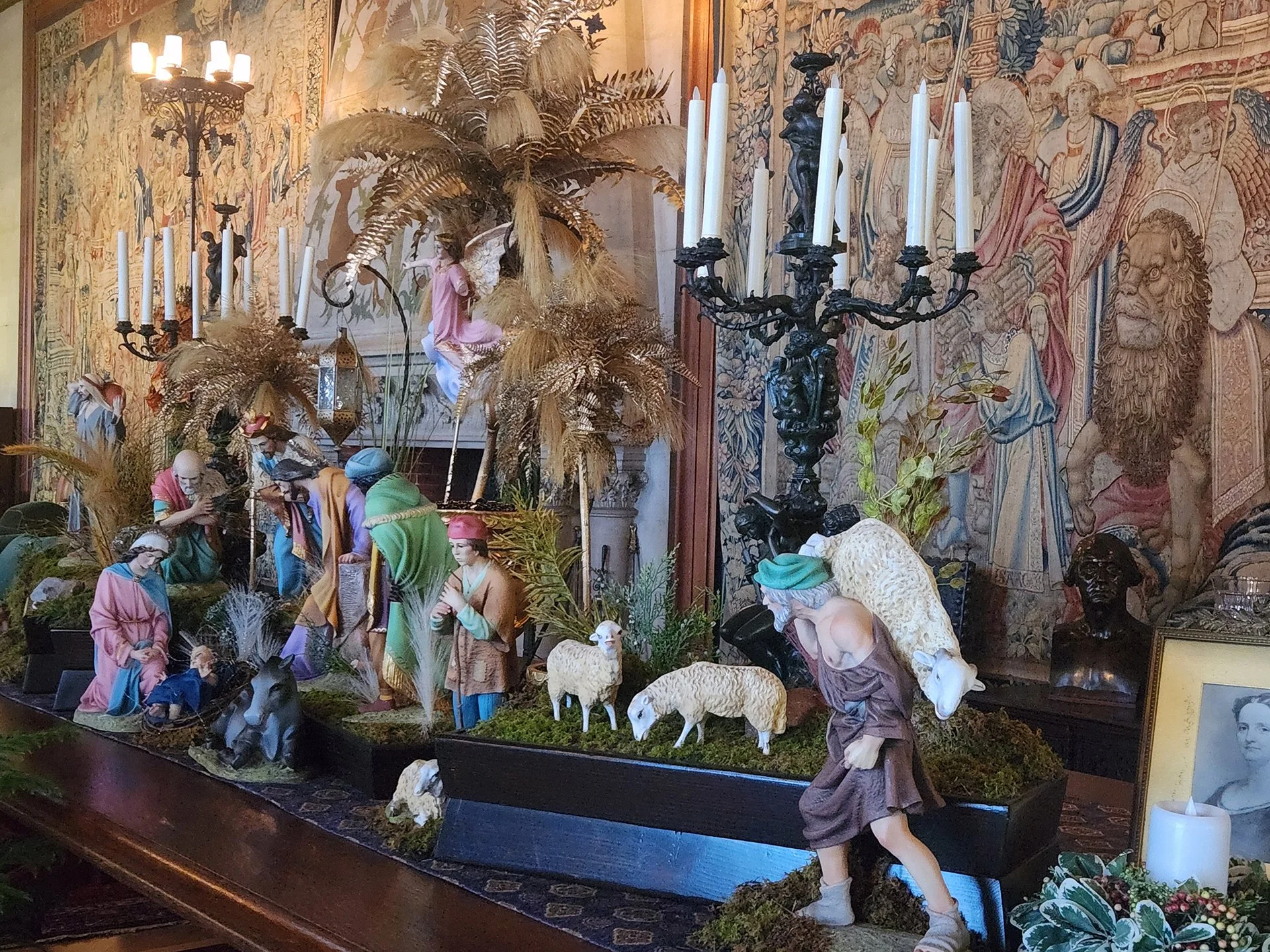
Nativity scene with priceless tapestries hanging in the background.
More than a million people visit Biltmore each year, and it’s not difficult to understand why. While the statistics are impressive, I discovered a surprising empathy for George. The youngest of a family of nine, George was shy and introverted. He was passionate about learning, travel and art. He was reportedly very generous to and caring of his necessarily ample staff. The family’s on-going respect for the people who built and continue to run the house was evident throughout our tour. Despite the grandeur and lavishness of Biltmore, a palpable vibe of humility reigned for me. I noticed it in the audio-tour, in the honest pride of the staff, and even in the lack of outright ostentation that can be common among the ultra-wealthy. It was enough to make me want to go back.
Basement hallway shows the incredible masonry in the foundation.