The Delightful Dolomites
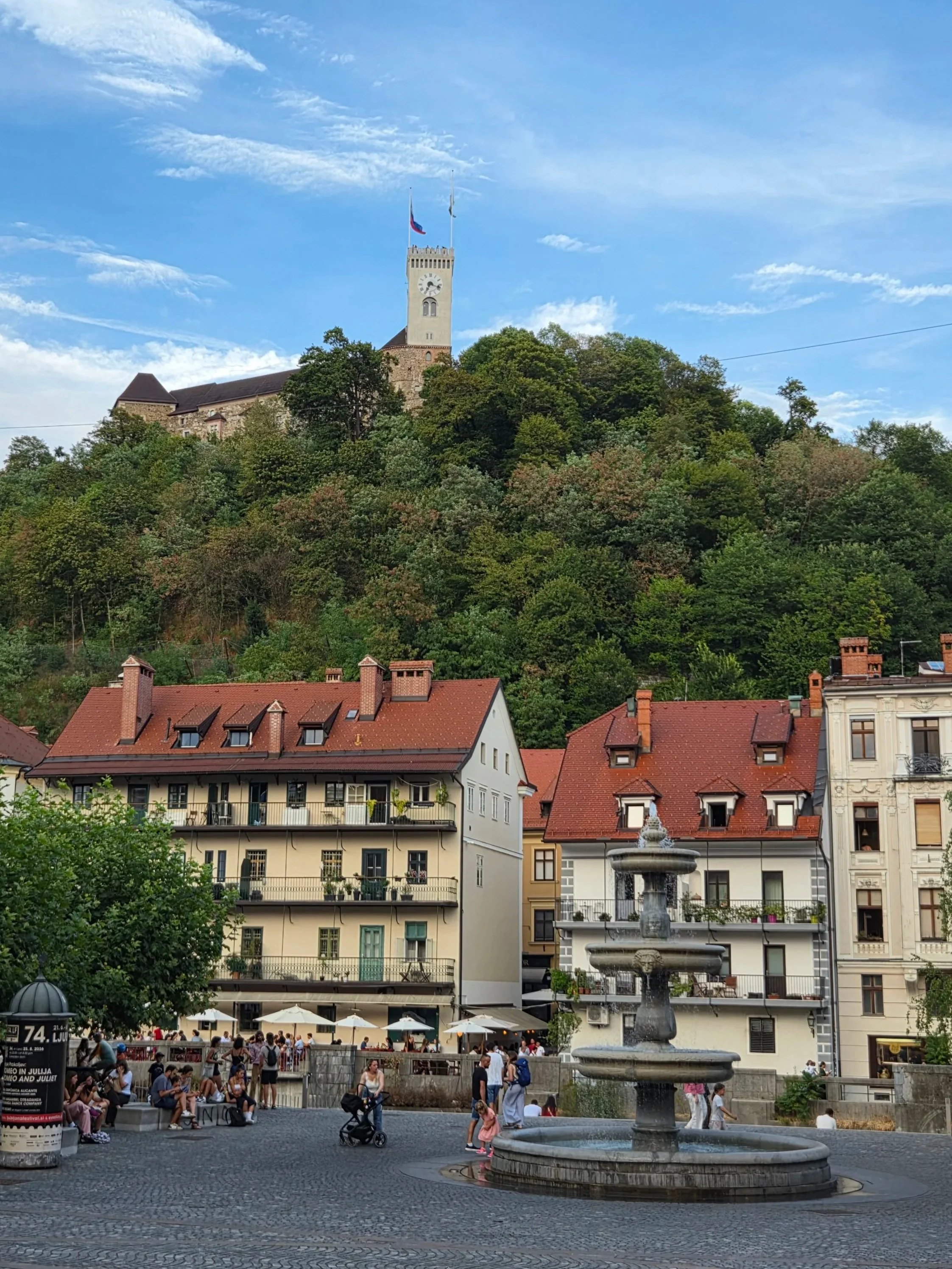
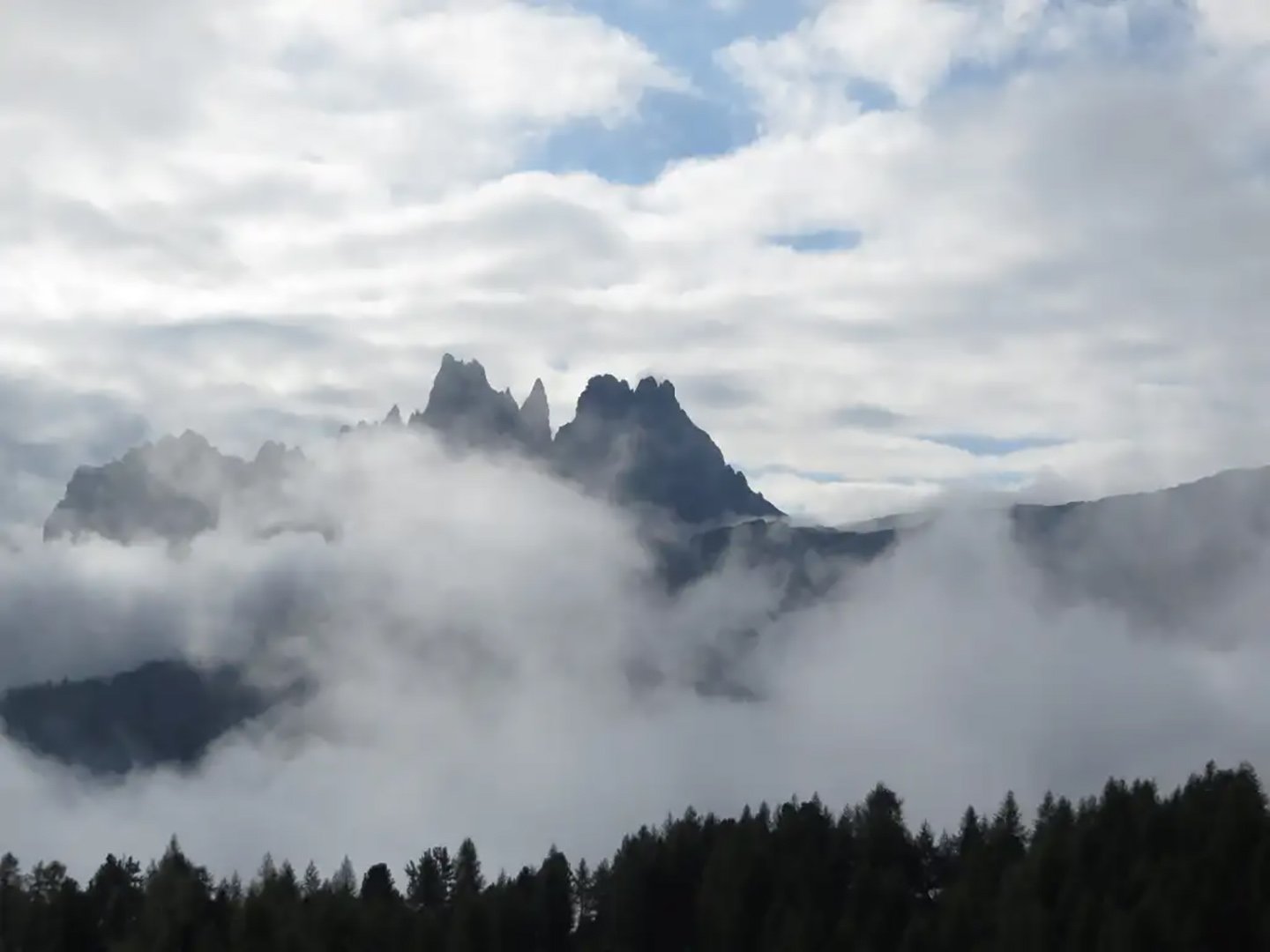
Tucked in the northeastern corner of Italy on terrain hotly contested in World War I and again in World War II, the Dolomite Mountains march gloriously southeast toward the Adriatic Sea. These mountains don’t jut so much as carve a serrated skyline with jagged knife-edged drama. I first witnessed them in 2010 from the town of Lienz on the Austrian side and thought, “I have to go there.”
Lake at departure point
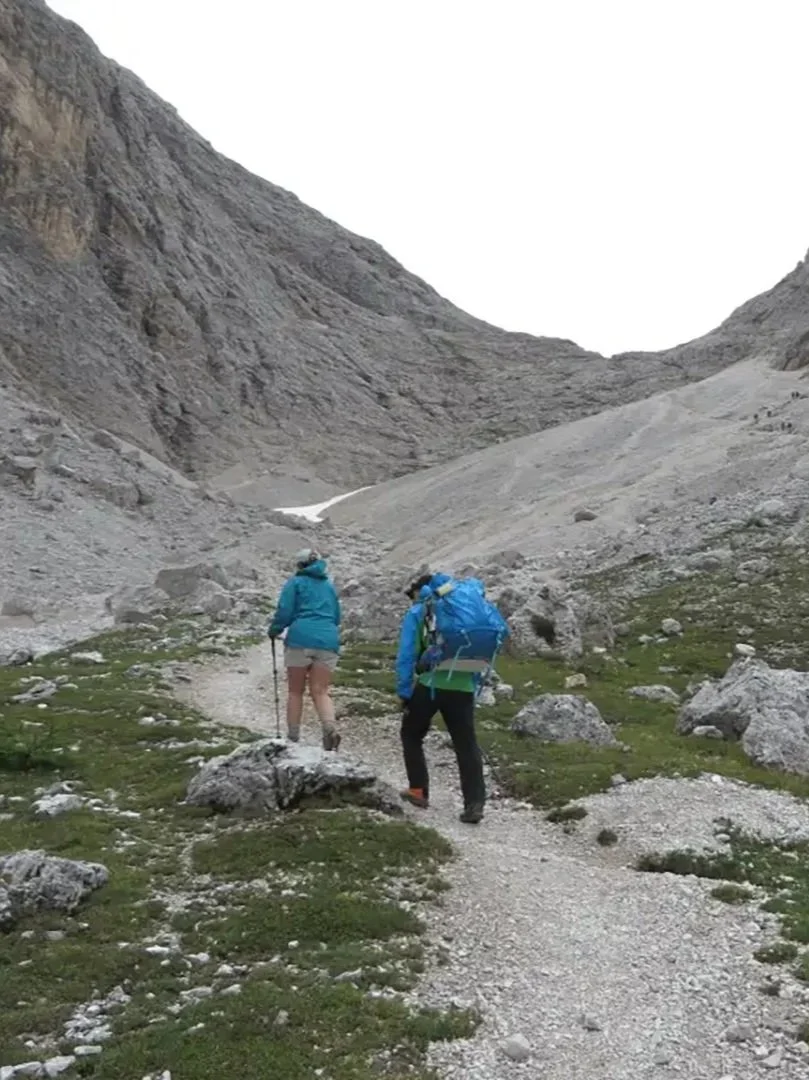
Climbing to the pass, first day
Luckily for me, the perfect opportunity soon arrived on an alumnae trip with NOLS (the National Outdoor Leadership School). In 2014, I joined a group including two very good longtime NOLS buddies, as we sampled the delightful part of the world known as Parc Naturale delle Dolomiti d’Ampezzo. It is not far from the popular ski resort of Bolzano and Cortina d’Ampezzo, site of the 1956 winter Olympics. This blog (originally appearing in another blogsite, “Design Destinations” in 2014) is rewritten in honor of the upcoming 2026 Olympic Games in Milan and several skiing centers in those dramatic Dolomite mountains.
The Dolomites are composed of sedimentary carbonate rock imbued with a lot of calcium [source: “Dolomite” in Wikipedia.org]. Although sometimes multi-hued, the predictable result are often brightly white vistas. Imagine: a white mountain range without snow. Stunning.
The “Rifugio Venezia”
The Dolomite area is intensely popular with hikers, and so it is laced with well-marked trails. Some send you straight up (say, 3,500 vertical feet, for example, as on our first day), or down through steep scree fields. Some meandered through grassy meadows and past alpine lakes, where we might pass cows swinging their bells in lovely aural accompaniment with our footfalls. Some were the same paths used by ill-equipped soldiers in what was a brutal part of the Great War in the early 20th century—and we could still see the bunkers and battlegrounds. The fighting that occurred in those times is referred to as “il fronte verticale” or “the vertical front.” This is in reference to the extreme conditions encountered by soldiers, many of whom were from the south of Italy and had never seen snow. There were, as a result, more deaths from cold, avalanches, harsh conditions, and steep terrain than in battle.
MUD!
Our group walked for seven days and nights, exploring the mountains from Lago Braies to the roadhead at Borda di Cadore. Sometimes as we walked, we were in socked-in, foggy drizzle, sometimes not. I can attest: some of the trails were challenging, especially on the last couple of days. They could often be muddy-mean. Very muddy! Did I mention mud?
WWI bunker
We rested our heads each night at a different high-country hotel, known in Italy as a rifugio. These destinations were welcome after days spent hiking 5 or ten miles (for a total of 50 miles overall). At each rifugio there were shoe-drying rooms, adult beverages, hot showers (sometimes), and multi-course dinners. We stayed in bunkrooms where we had comfy beds, quilts or blankets, and pillows, using our own sleeping sheets (and earplugs to blunt the snoring!).
WWI barbed wire
“Fellow trekkers!”
Although it was rigorous, the Dolomites are a place where I’d return to if it ever becomes possible. As the newest round of Olympics ramps up, I feel very grateful to be able to return at least in my mind’s eye to that beautiful place. All in all, it was a splendid adventure.