Slovenia: The Journey Continues
After some hot August days in Ljubljana, we drove our rental car northwest to the serious terrain of the Julian Alps. On the way, we passed through the iconic town of Bled. Virtually every tourist book includes photographs of Bled because it is one truly “must-see” place—and for good reason.
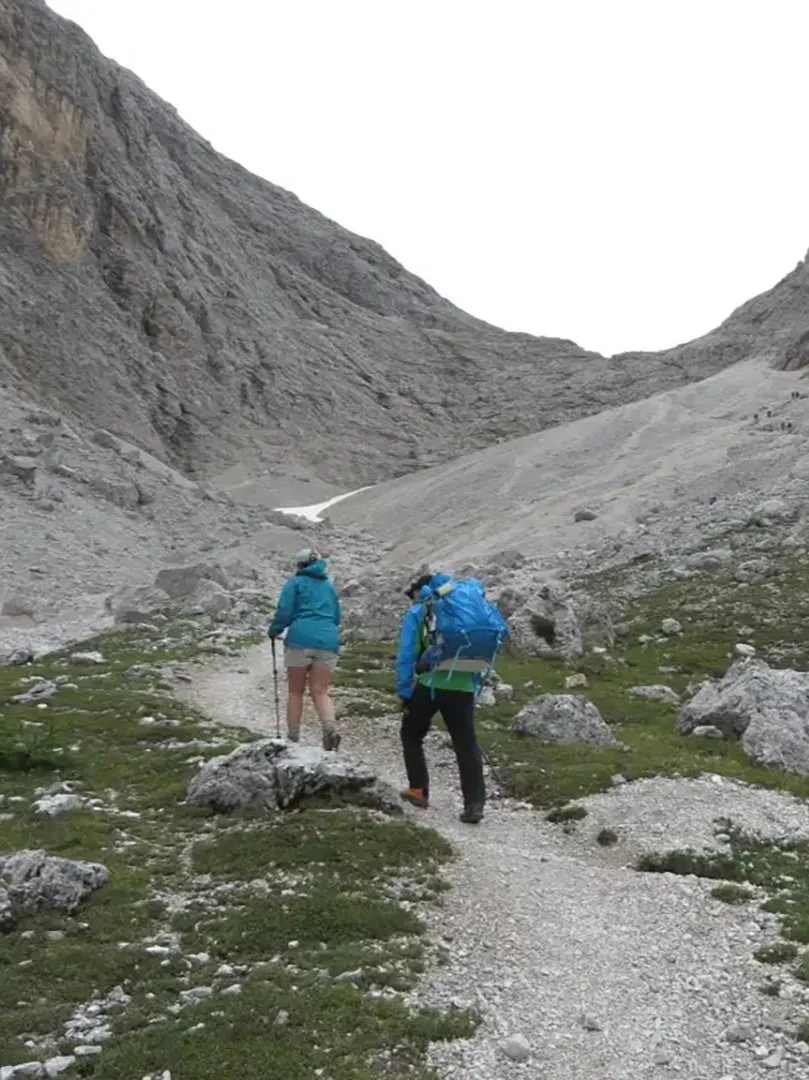
A welcome Mountain Hut
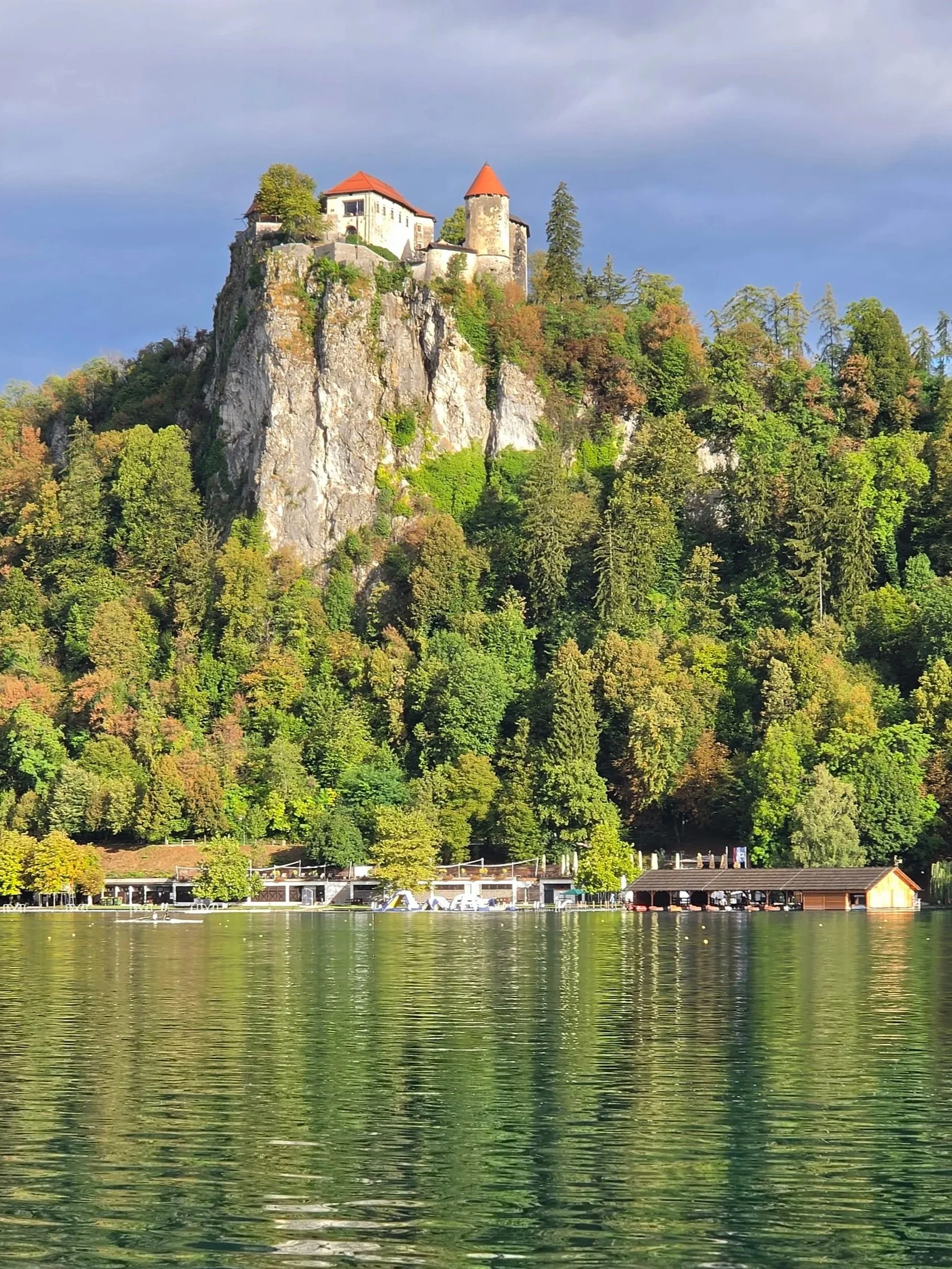
Bled rests on the shoreline of a large lake punctuated in the middle by an island. There, the 15th century Church of the Assumption sends its spire dramatically into the sky. There is also a picturesque castle clinging to a cliff by the lake. That Bled is on the itinerary of everyone who visits Slovenia was evidenced by the crush of people and cars that day.
Traditional method for drying hay
Luckily, we were just passing through on our way to the much less touristy town of Bohinj, where we lunched on a Slovenian staple, goveja juha (“beef soup”). Popular since the 19th century, it is a clear beef broth often served with a few thin noodles. It quickly became a favorite in our group of four. Then we escaped a couple of miles west to the quiet hamlet of Stara Fuzina and our Air B&B, which was a former mill.
Lake Bohinj
The next day, we hiked 2,300 feet uphill and 7-ish miles roundtrip to a renowned waterfall (just a trickle due to yet another drought-filled summer). Our spirits were boosted along the way by two well-spaced mountain huts, or planinska koca. They served refreshments, including beer, various famous Slovenian pies, and other robust foods. After a good night’s rest, we walked the 4+ miles to the far end of Lake Bohinj, where kayaks and standup paddleboards were available to use before catching a ride back across the lake to town on the wooden ferryboat.
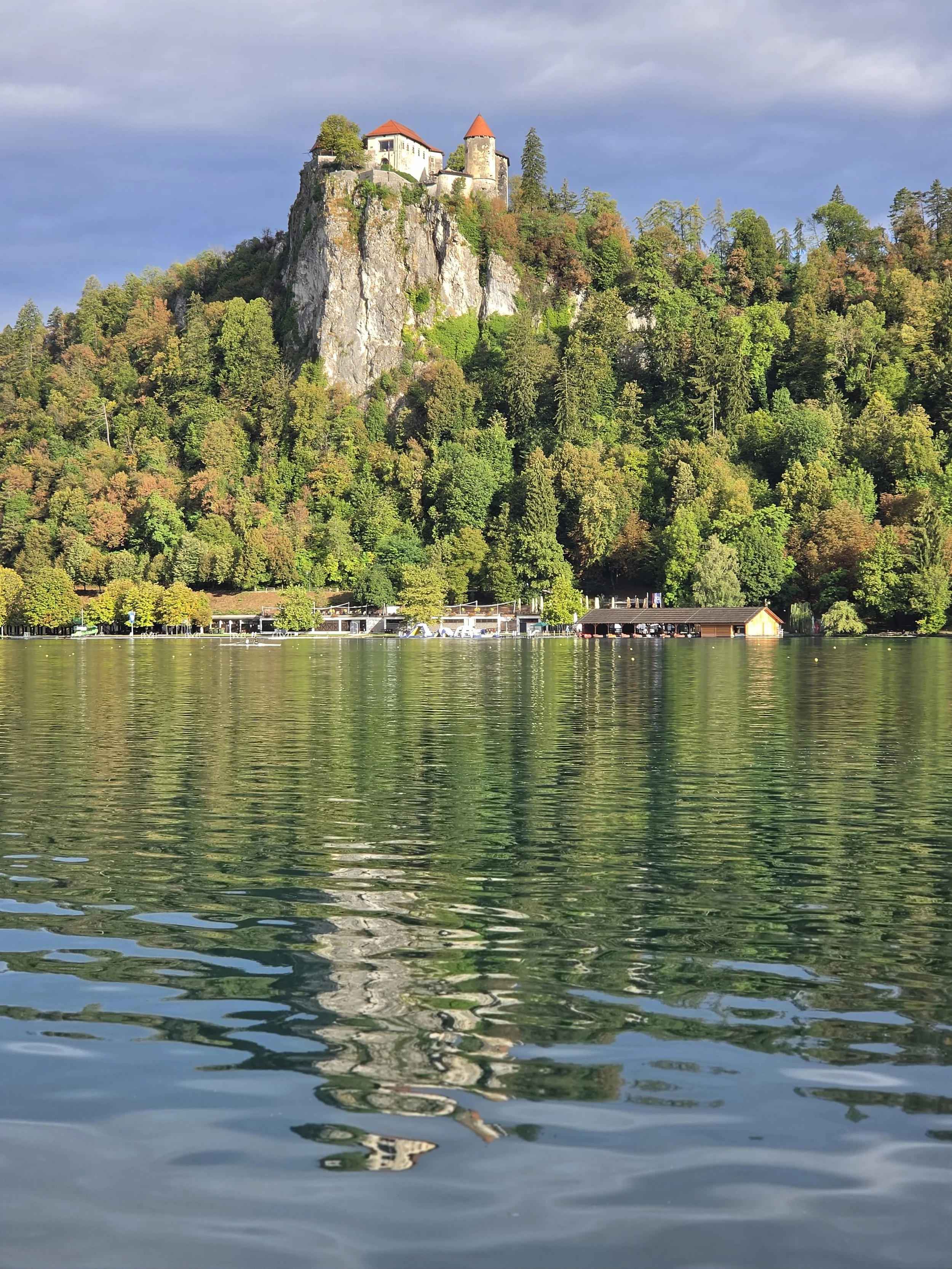
Bled castle on its cliff above the lake
For our morning in Bled, our Slovenia-seasoned friend got us up early for the 30 minute drive from Bohinj. At 7:30 a.m., parking was still possible! We skipped visiting the castle, but (of course: one must!) took the famous traditional “pletna,” a wooden boat rowed by a very strong oarsman, out to Bled Island. Ascending the 99 stone steps to the church and its plaza was wonderful in the cool, unhurried, uncrowded morning. I opted to pay to enter the church; when I went up the clocktower I was well rewarded to witness the ancient pendulum clock strike the ten o’clock hour. Back on shore, we felt obliged to try Blejska kremšnita (Bled cream cake), a famous traditional Slovenian dessert invented there in 1953.
Our strong oarsman loading up passengers
From Bled, we drove two hours south to the Adriatic seaside town of Izola, just north of the more popular (and touristy) town of Piran. When we went out to look around we discovered the town was in the throes of its annual Fisherman’s Festival. How fun to be greeted by thousands of happy Slovenians enjoying multiple music venues, a VW bus re-designed as a pop-up Aperol spritz bar, food booths, artisan crafts, and more.
Beach day in Izola
Predjana Castle tucked safely into its cliff
After a day of people watching at the (rocky) shore with beach books and gelato, we headed back inland to two more “must-see” places: Predjana Castle—timed again to slip in ahead of the tour bus crowds—and Postojna Cave. Predjana Castle (lived in until the end of World War II!) dates back to 1275. It is built under a natural rocky arch into a cavernous hillside. Beseiged, destroyed and rebuilt several times, it includes a secret passageway, impressive water management, a beautiful display of knights’ armor, dozens of stairs, and both a chapel and dungeon.
One of thousands of stunning underground formations
Postjna Cave is its own touristic beast, so I was glad we got reservations early and endured the crowds. It is worthy of its very own blog. (Take a look! See: https://www.postojnska-jama.eu/sl/postojnska-jama/]) Already in use by the 1200s, the cave’s 15-mile long system was enough of a tourist destination by 1812 that even Archduke Ferdinand visited. By 1872, a cave train and modern lighting brought tourists deep into the hillside. Today, more than a million people a year ride the train into the depths and then walk along a passageway through wondrous caverns. Before the ride back out, you can mail a postcard from the world’s only underground post office, in operation since 1899.
Maribor’s 400 year old vine
Our final days in Slovenia were spent in the wine region of Maribor, where a 400-year-old vine is still producing grapes! A morning at the National Liberation Museum was a worthwhile (if sobering) lesson in the struggles for independence endured by the people of what is now Slovenia. We also visited the delightful city centers and castles of Celje and Ptuj (commenting often on the Slavic language’s love for consonants), all the while aware that there is still a whole lot to see in this proud and gentle nation.
View from Ptuj Castle