Hiking in Zagori, Greece
A random travel article came across my desk a while ago about hiking in Greece. Hmmm....I thought, isn’t Greece all about the islands? The article referred to the Vikos Gorge, said to be the deepest (in proportion to its width) in the world, and how the Zagori region in the Pindus mountains of northwestern Greece is untouristed and in pristine condition. My intrepid hiking friend, Linda, agreed: we had to go there! Joining us was another good friend and explorer, Molly.
Our hotel in Tsepelovo shows typical stone architecture of Zagori.
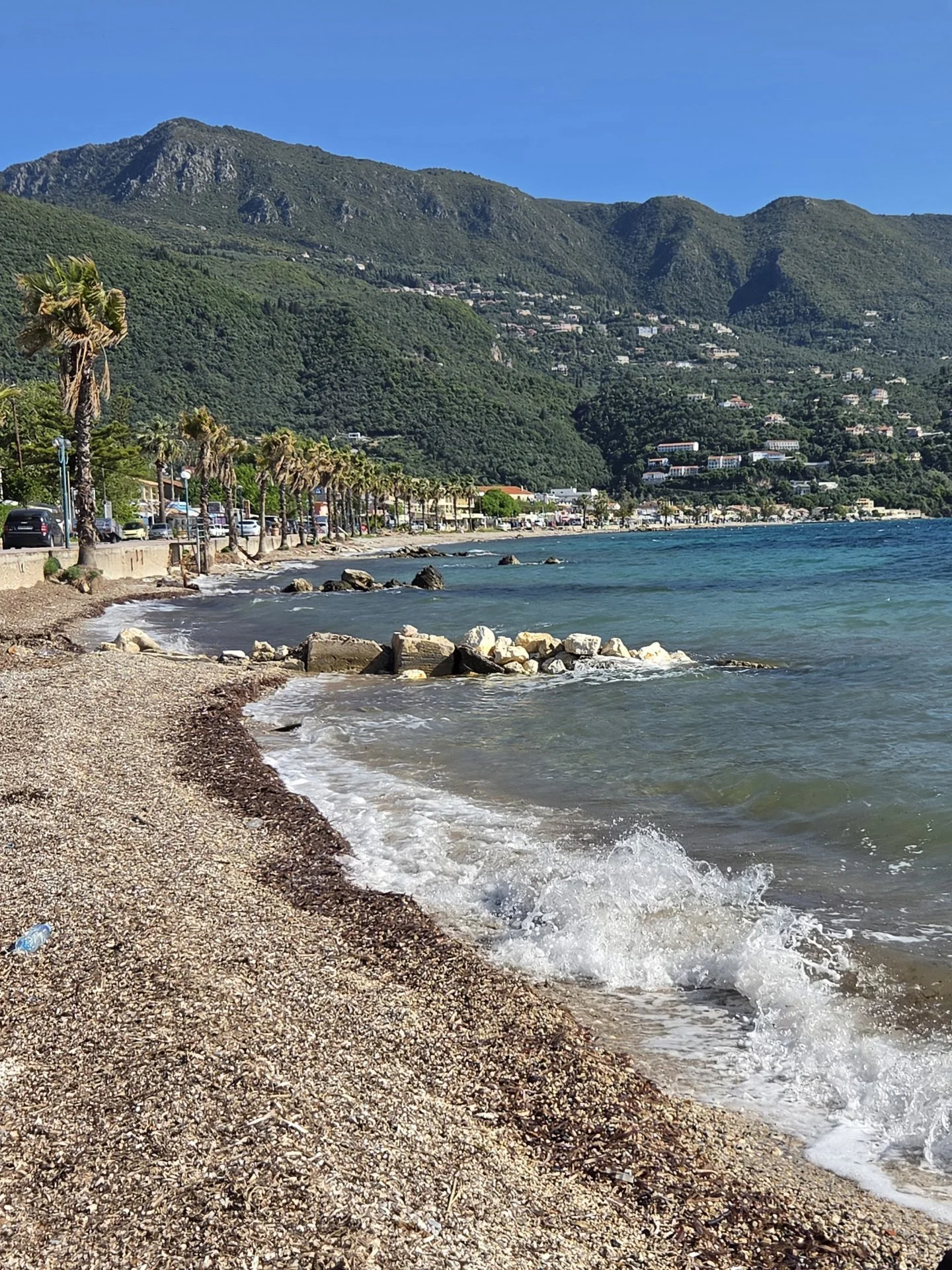
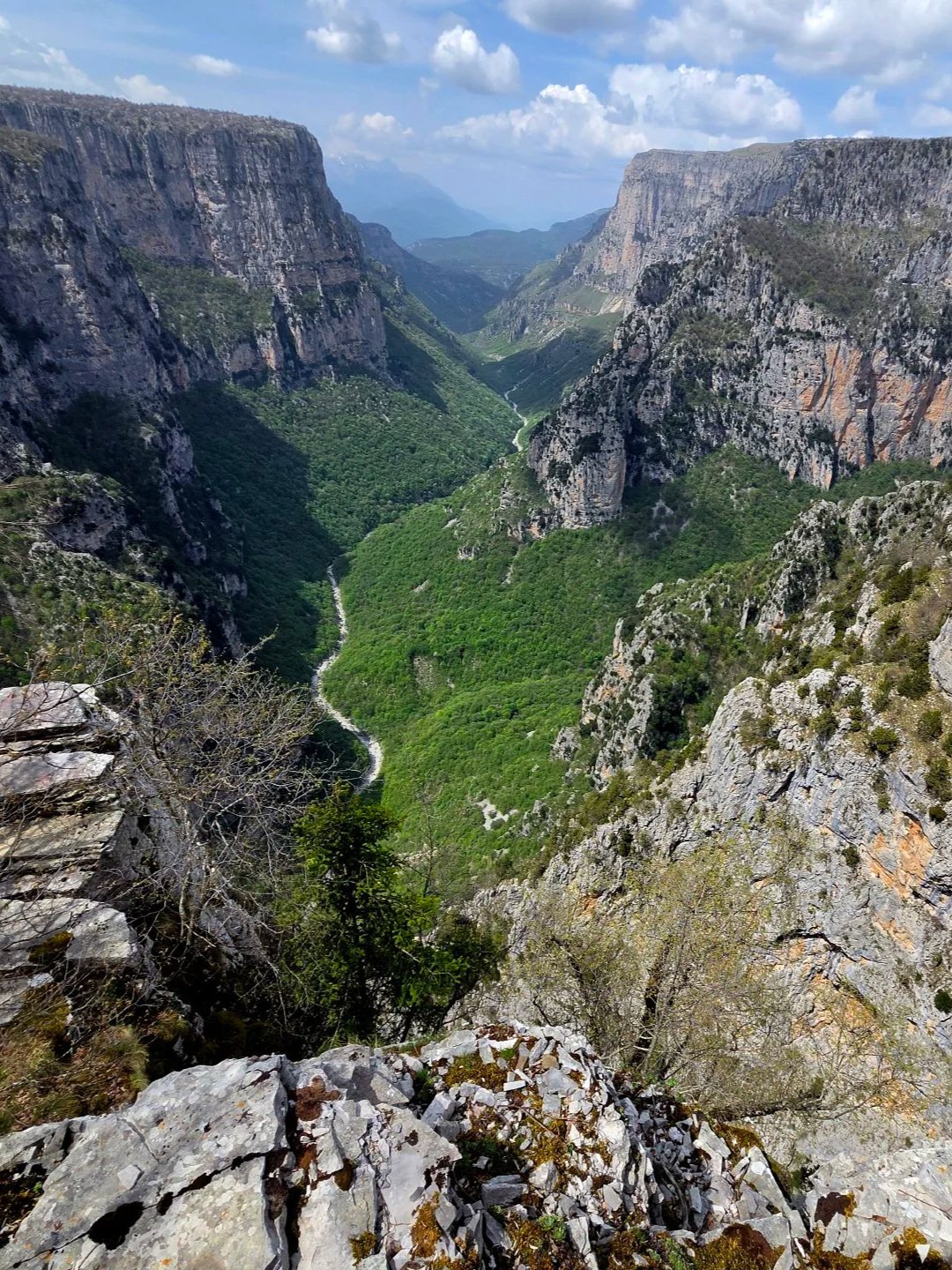
Our first view of the gorge, at Beloi overlook
Although the mountainous nature of Greece had never crossed my radar, it didn’t disappoint. We arranged a wonderful, self-guided five-day, 35-mile walk. Our local host, the delightful and knowledgeable Lucas, of Lucas Adventures, moved our luggage from one village to the next each day (on roads not built until the 1970s!) while we walked along centuries-old historic trade routes that were once the only pathways between the region’s villages.
This topographical map shows the gorge well!
Zagori, as with so much of eastern Europe, has a complicated history of identity and autonomy. It persevered for a long time as an independent area during the Ottoman Empire, focused on thriving trade without outside intervention but instead led by a Council of Elders. The 17th and 18th century economies gave rise to beautiful villages of stone buildings that still endure. Once, there were some 60 villages in Zagori and a population of about 60,000. The people enjoyed a robust intellectual and cultural life, and traditional folk medical practitioners (“Vikos doctors”) flourished, famous well beyond the borders of Zagori for their use of herbs gathered in the Vikos Gorge.
If you look carefully, you can see the Vradeto Scala “road”!
Sadly, the villages are nearly deserted now, thanks to migration to the urban centers. Tourism is increasing, though, and helping to reinvigorate the region. UNESCO added Zagori to its list of Cultural Landscapes in September 2023. We were glad to drop some tourist dollars there! We enjoyed beautiful springtime weather, early wildflowers, and views of distant snow-capped peaks. Our walks were along cobblestoned pathways, up and down on typically mountainous terrain, from one village to the next, as merchants long ago would have done.
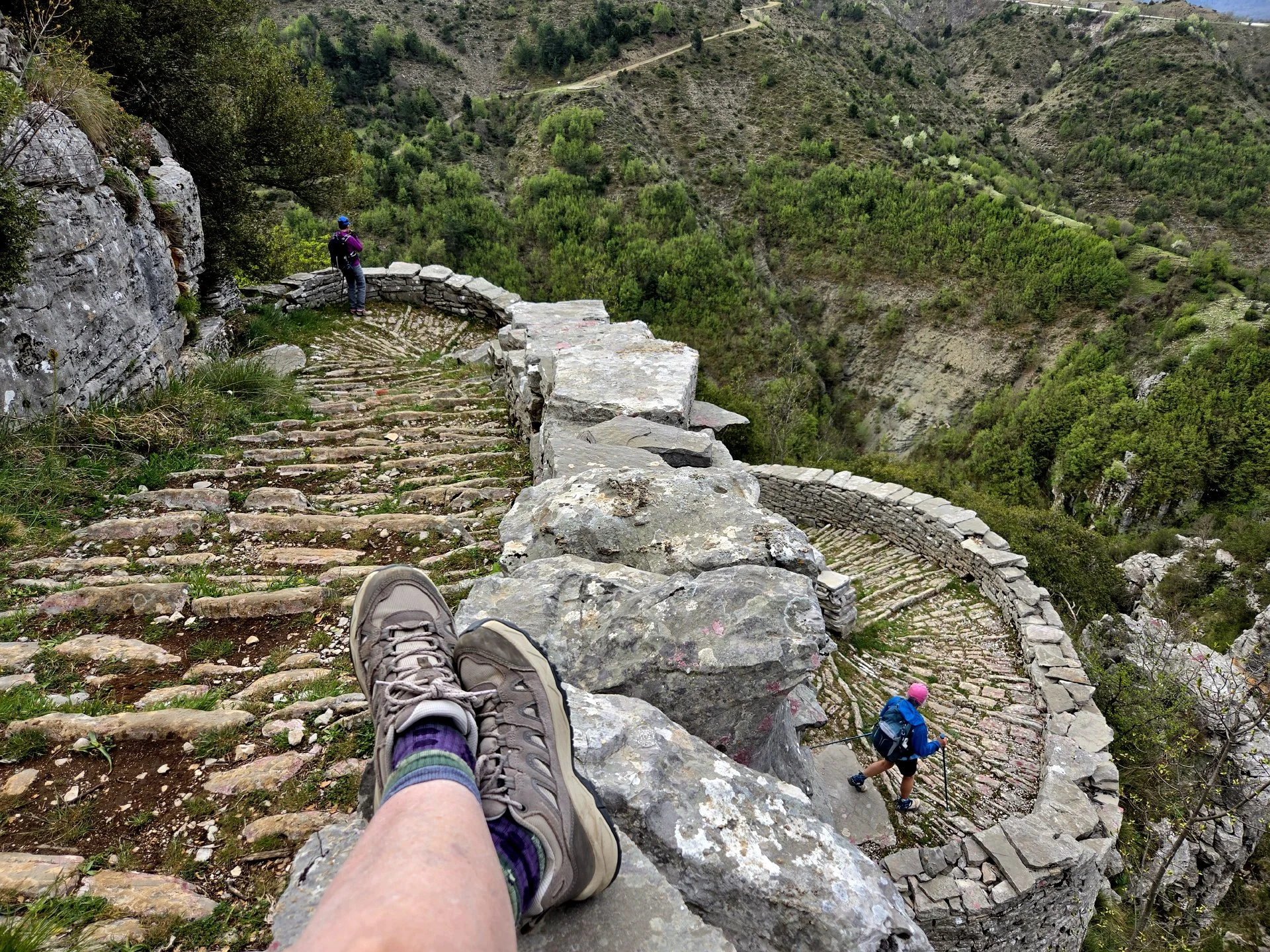
The winding Vradeto Scala, all the way to the valley below
We started our journey southeast of the Vikos Gorge in the village of Tsepelovo. That day, a side trail took us to the Beloi viewpoint for our first glimpse of the gorge (which was, predictably, gorgeous!) before we arrived at Vradeto. Mr. Spiros of the Balcony Hotel served up a delicious dinner on his patio – and so our days went.
Day Two: down, down, down the Vradeto Scala (“Steps”). This was a tough, switchbacking descent on an impressive old cobblestone path. I could imagine caravans of mules laden with goods making their way up and down this “main” road! The trail brought us to the river on the valley floor, then up to Kapesovo, then down (again) to Kipi.
The 800 year old plane tree in Vitsa’s town square
That afternoon, we walked a 2.5 mile loop to see three of the region’s 160 iconic stone arched bridges (in addition to the splendid one that greeted us on the outskirts of Kipi on our arrival). The bridges were built in the heydey of Zagori, often by wealthy traders to benefit their communities. Another key feature of the Zagori region villages are the central squares, each with an immense plane tree. Folklore has it that a plane tree was planted when villages were founded, to demonstrate the presence of water. On our hike on Day Three, we went through Koukouli to Vitsa, whose 800-year-old plane tree commanded our deep respect and attention. After refreshments of lemonade and cookies, we finished the day in Monodendri.
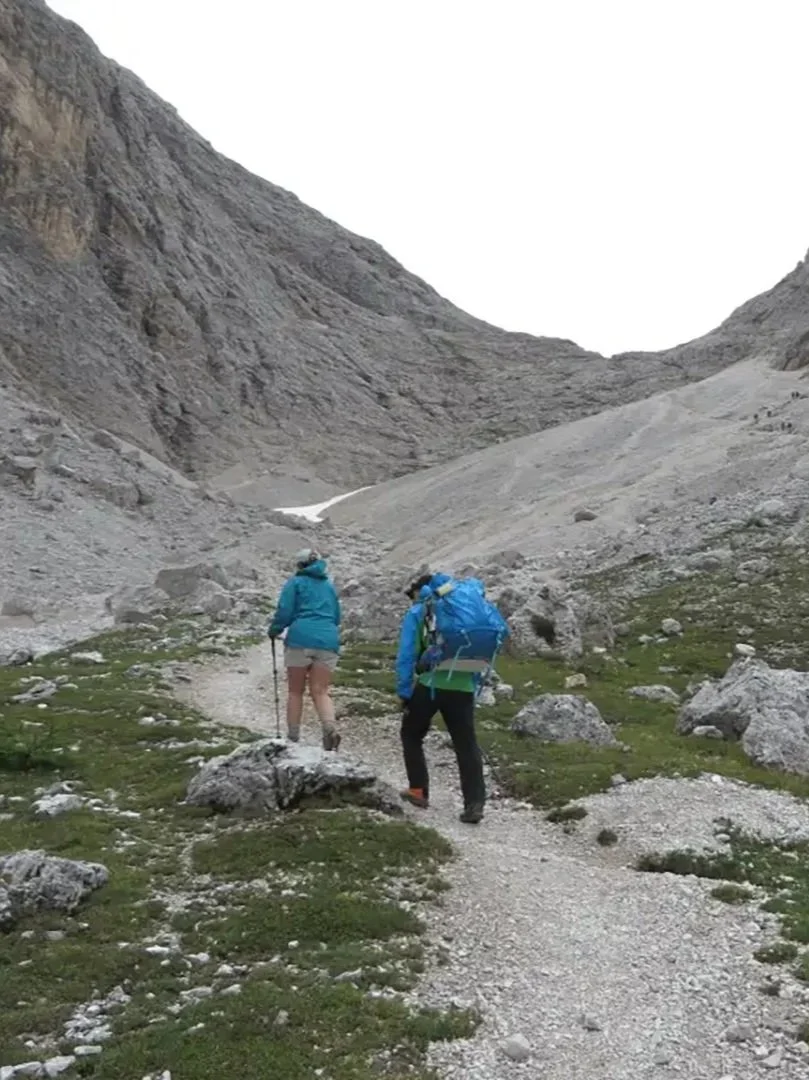
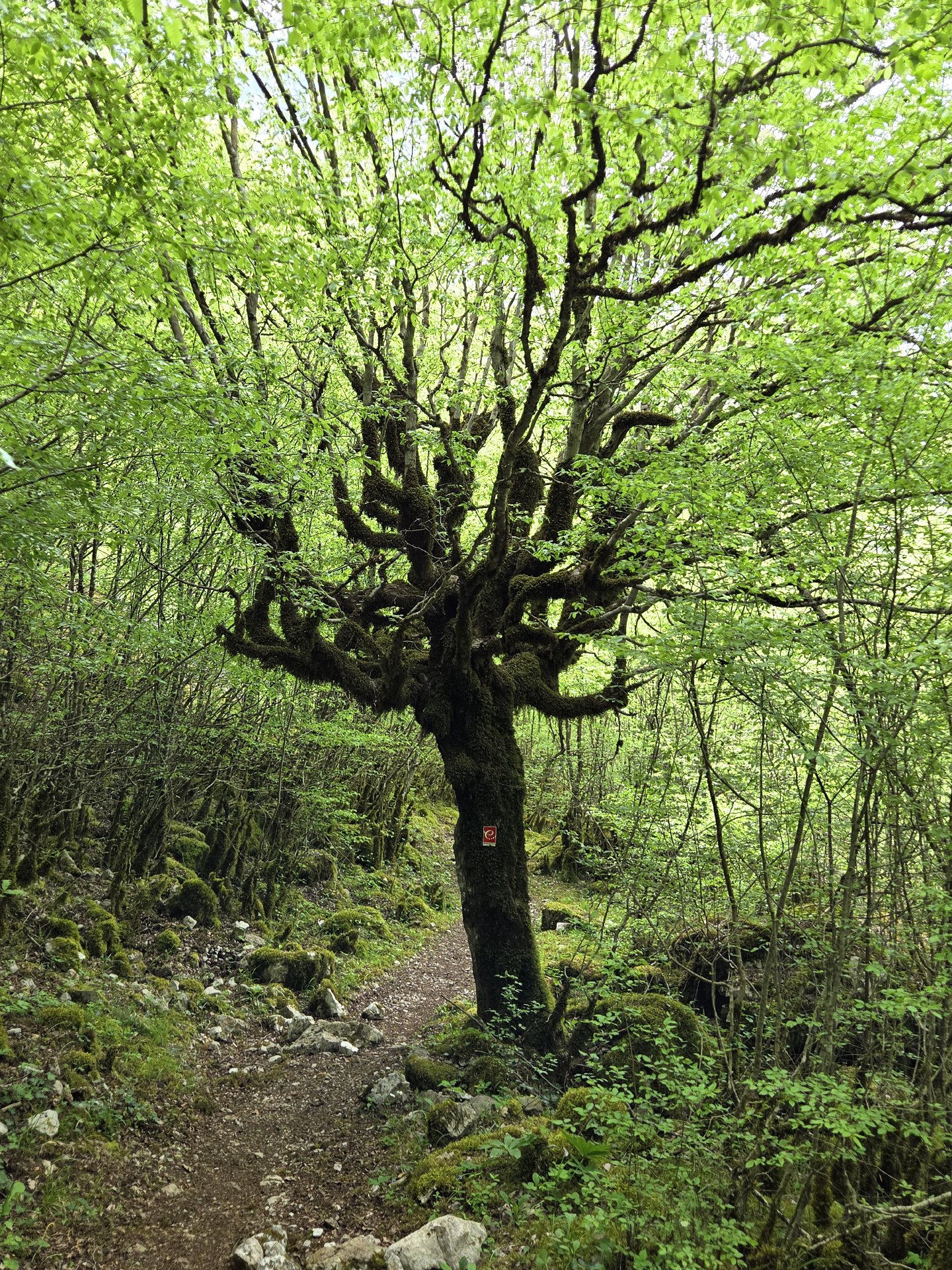
The start of Day Four found Molly and me dropping steeply thousands of feet into the gorge. Then came magical miles along the valley floor, through woods worthy of Lord of the Rings and along a dry white stone riverbed, before the climb back out at Vikos Village. We bet on whether we’d meet up with anyone, and were solo for many hours. Then, along came a handsome (!) shepherd, his two dogs, and dozens of goats wearing bells. In all, we encountered maybe 12 people or so all day. We scrambled across some easy third class sections and some other exposed areas, but nothing was too hard (well, until we faced the end-of-day uphill to a shower and dinner!). There, we caught up with Linda who sadly had to skip the hike that day due to a hefty respiratory infection.
A mesmerizing spread of roots on a cliff in Vikos Gorge
By the way, before heading to Greece in April 2026, I thought I’d learn a bit of the language. The Greek alphabet, though, upended my lifelong relationship with letters. I soon gave up, overwhelmed. During our two weeks, it felt successful simply to ask for “vepo” (pronounced “nero”) and receive some welcome water! Vai! (“nay”!): yes! Water!
Our final day in Zagori led us back down the trail into the gorge, then across to the path out on the other side. There, Lucas picked us up at Mikro Papigo village for the ride back to the small city of Ioannina for Part Two of our Greek adventure (see the next blog). We agreed: we were happy to have discovered Zagori and to have had the opportunity to hike the 35+ miles and 95,000+ steps we did there. There are many other paths, Lucas promised, if we ever want to come back. I could be convinced.
[If you’re drawn to Zagori, you can’t go wrong with having Lucas help you plan: https://lucas-adventures.com ]
This sign reads “Ioannina”!
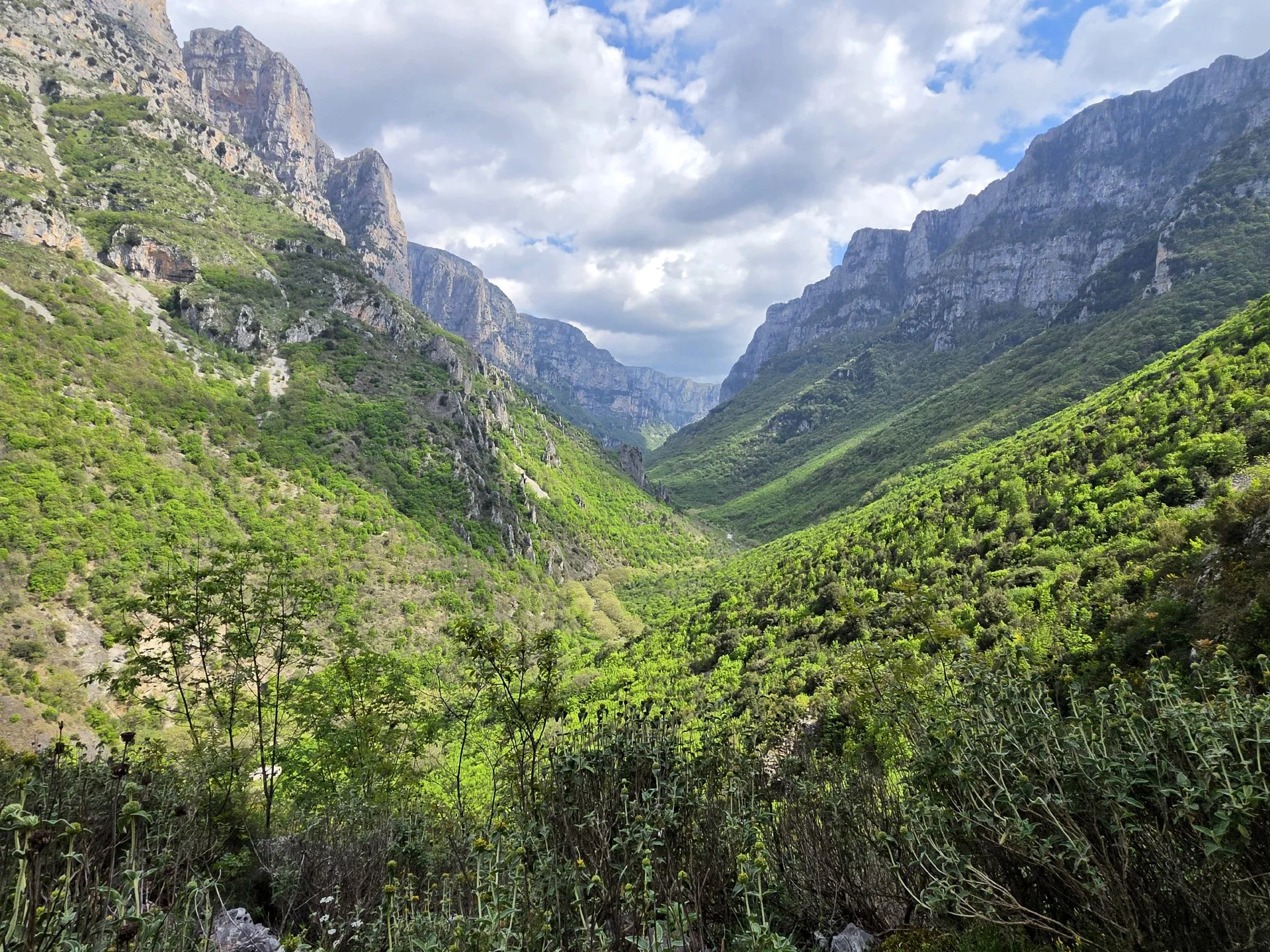
Vikos Gorge at the end of our long day walking its length