Quinoa and Other Peruvian Delectables
In 2015, I had the good fortune to walk forty-two miles across the Peruvian landscape for six days. We departed from the village of Mollepata and ascended the 15,350-foot Salkantay Pass. Our trek then took us downhill to a train that carried us into the touristy town of Aguas Calientes. The next day, we boarded busses to ride back uphill, to 7,970 feet, and the magnificent Incan citadel of Machu Picchu. But I want to write about the food.
A stalk of quinoa
It’s not often you encounter truly unique and interesting foods like quinoa and coca and guinea pigs. Peru has them all—plus chocolate and amazing coffee, for the record.
I was most fascinated by the quinoa. It’s great food, good for you, comes in a couple of thousand varieties, and has been domesticated for 3,000 to 4,000 years. The Incas, who regarded the crop as sacred, referred to it as chisaya mama ("mother of all grains"). I find quinoa to be delicious. It has a round, grainy, nicely-chewy texture and can be used in a wide range of dishes—even ice cream. The seeds are cooked much the same way as rice is prepared. Quinoa leaves are also edible, but commercial availability of the greens is limited.
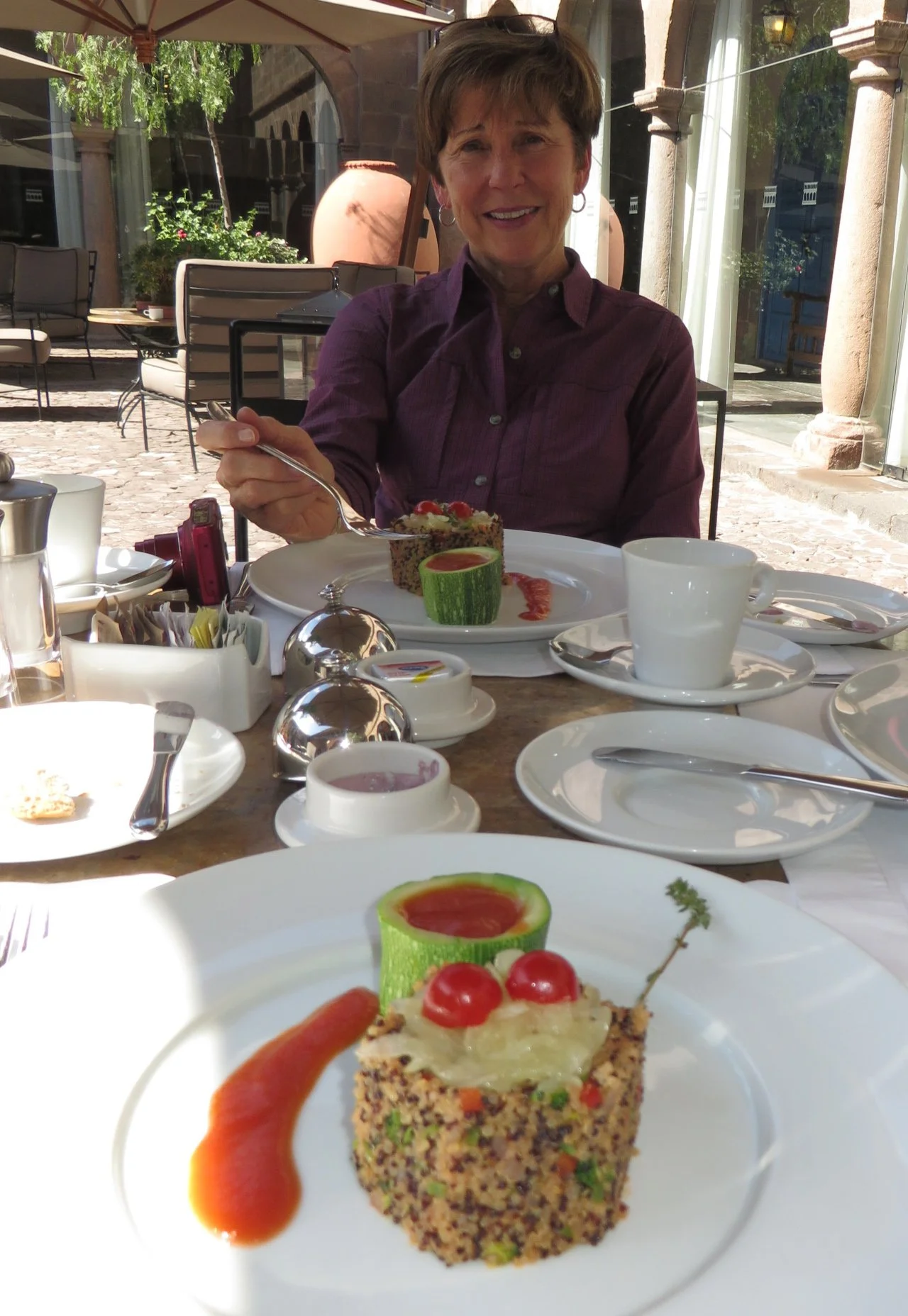
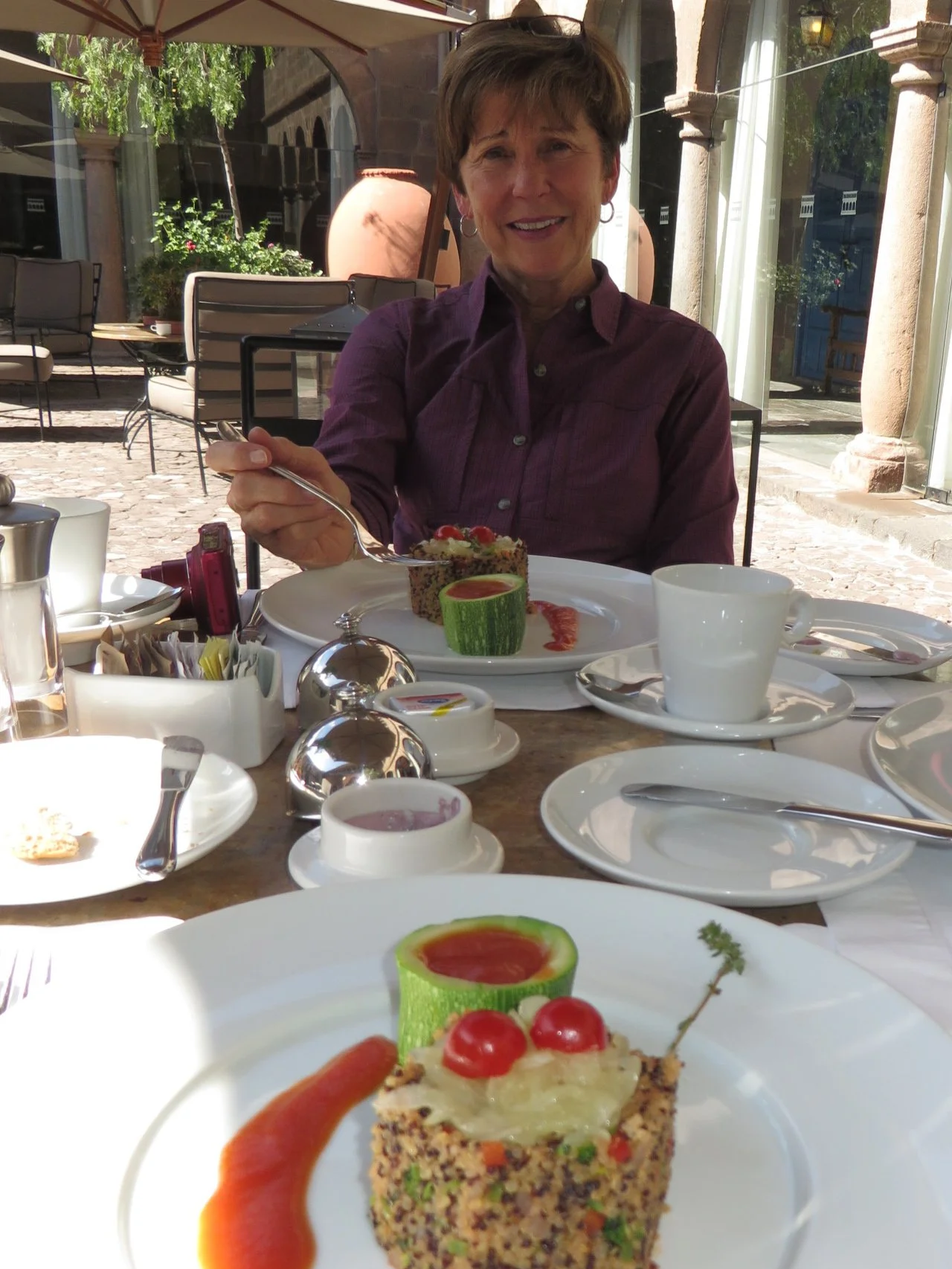
Quinoa salad for lunch with my travel buddy, Margaret
In 2013, quinoa was honored by the United Nations General Assembly in a declaration making it the “International Year of Quinoa.” It was, they said, “in recognition of ancestral practices of the Andean people, who have preserved it as food for present and future generations, through knowledge and practices of living in harmony with nature.” Most quinoa grows naturally almost throughout the Peruvian Andes, but it is also grown elsewhere in the Andes and in Spain. Short-maturity varieties are also grown in the San Luis Valley of Colorado.
Quinoa ice cream!
Quinoa (pronounced “keen-wa”) was named by the indigenous people of the Andes, who speak the difficult language of Quechua. According to Wikipedia, quinoa is, “a species of the goosefoot genus (Chenopodium quinoa), a grain crop grown primarily for its edible seeds. It is a pseudocereal rather than a true cereal, as it is not a member of the true grass family. [It] is closely related to species such as beetroots, spinach and tumbleweeds.” [Source: https://en.wikipedia.org/wiki/Quinoa on July 10, 2015] Nutritionally, quinoa is very high in protein (14% by mass), and contains low levels of gluten. Relatively high in amino acids, some consider quinoa to be a complete protein. It’s also chock-full of vitamin B (the “stress vitamin”), and even contains some potassium and calcium. Great food! Super food, some call it.
Guinea pigs “on the hoof” in the kitchen
About the guinea pigs: yes, they are a staple in the Peruvian diet and they are often found living in Peruvian kitchens (until delivered to the soup pot anyhow)! We tried them on the day we had a “panchamanca-style lunch” where meat and veggies are cooked in a traditional underground hot stone process. The flavor was unremarkable. Not normally squeamish about such things, I did find that I had to compartmentalize the fact that they are considered pets in America.
The underground hot stone cooking process
Peru’s other big food is coca because it is an important and long-standing part of the culture. Considered sacred, coca is central to important rituals of community and friendship. The stimulating effects of coca have been used by the Andean people for centuries. (Yes, it’s the stuff that results in cocaine when it’s in the wrong hands.) Some Andean villagers showed us their stash of dried coca leaves and the traditional way of making a wad and tucking it into your cheek to savor on the trail. We were also introduced to the delight of coca tea (but don’t drink it after about 4pm!), coca chewing gum, and coca toffee.
Sadly, when both Colombia and Bolivia got in trouble for supplying cocaine to the USA, much of the cocaine trade moved south into Peru. Nowadays, Peru is the world’s second-largest producer and exporter of the illegal stuff (with Colombia still on top). The drug trade has interfered with the age-old Andean use of coca as a dietary staple because the coca-growing areas are increasingly under the thumb of the drug cartels (and in the gunsights of the drug enforcement community). Very sadly, producing cocaine involves an environmental disaster of poisonous brews that flow into the sources of the Amazon River basin from those illegal operations.
Our guide, Pepe, with two Quechan villagers. Notice the difference in height!
Even now, years after spending time in Peru, it is a pleasure to rinse a batch of quinoa seeds (to reduce bitterness), bring them to a boil, and let them simmer for 20 minutes or so before fluffing the cooked seeds as they cool. I might add some sauteed veggies or a little meat. Then I’ll sit down to a delicious meal, knowing I’m bound for good memories of that journey while chewing the somewhat-nutty flavor of quinoa and deriving the healthful benefits of this great food. (I’ll skip the guinea pigs and cocaine, though, thank you!)
[Note: An earlier version of this newly-edited and updated blog appeared at Susan smith’s blog, “Design Destinations” in July, 2015]
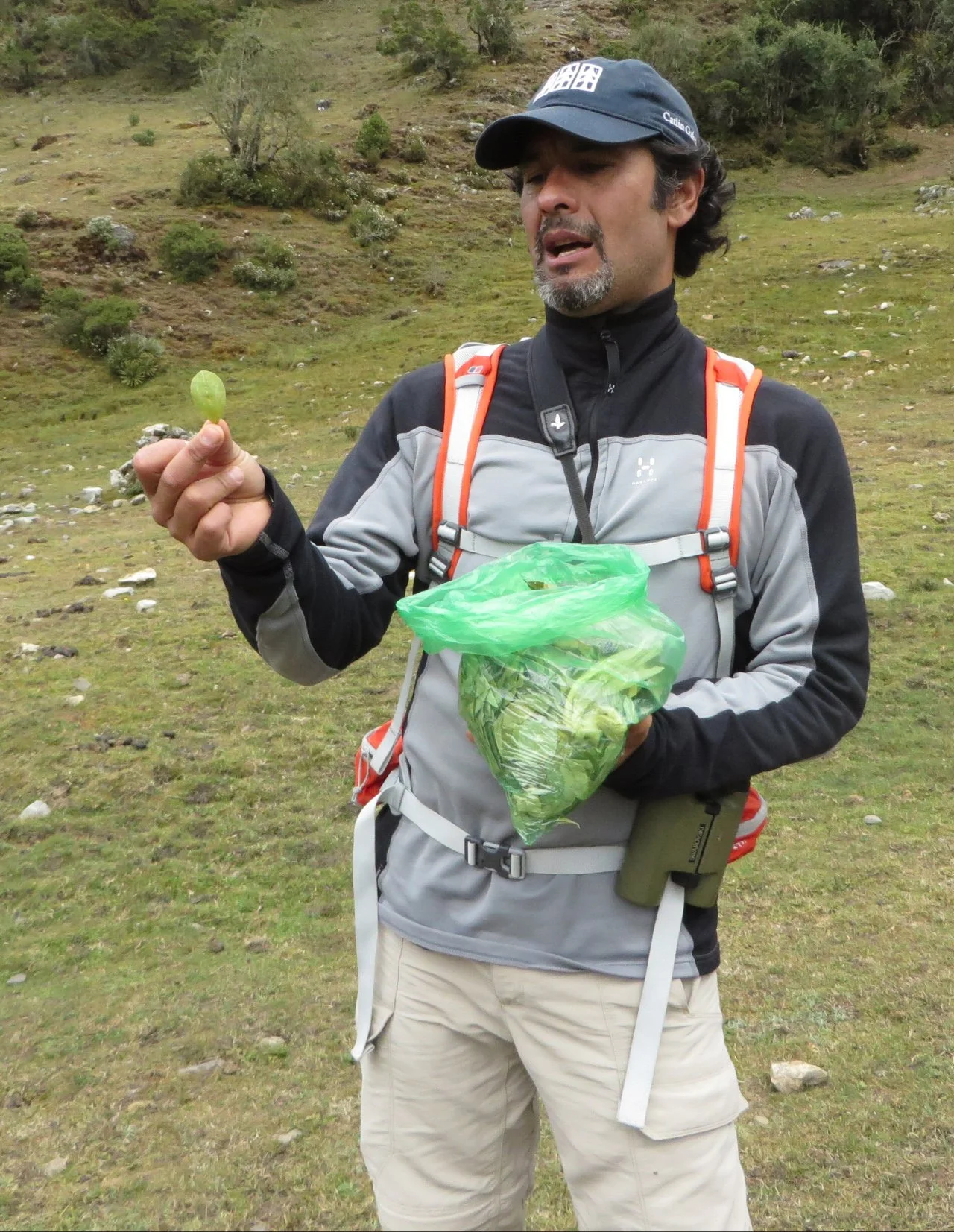
Pepe and the villager’s bag of coca leaves